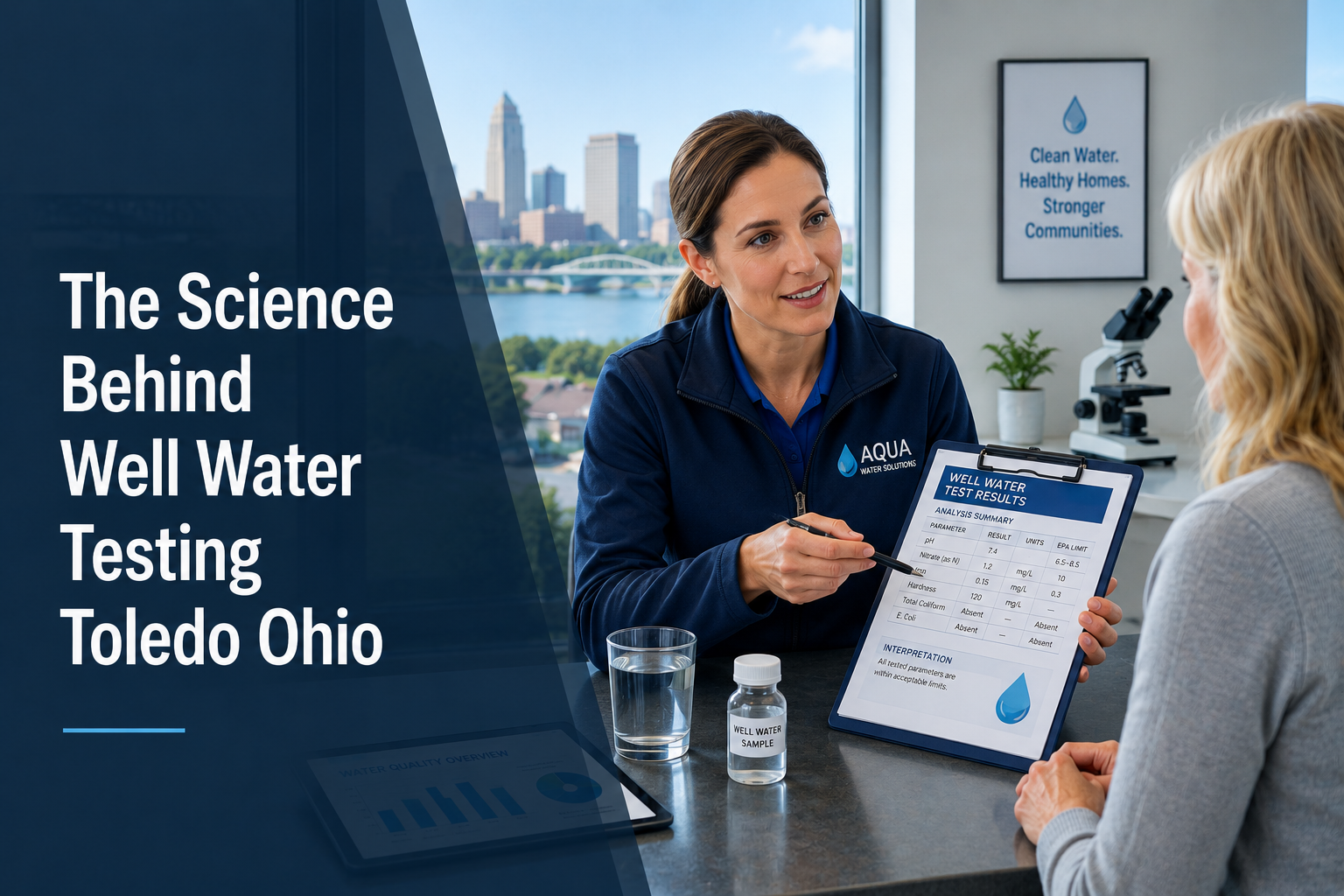
Well water may look clean, taste normal, and have no obvious odor, but that does not always mean it is safe. Many contaminants cannot be seen without proper testing. This is why well water testing is important for homeowners, property managers, and businesses that rely on private wells.
In Toledo, Ohio, well water can be affected by soil conditions, aging plumbing, nearby septic systems, agricultural runoff, minerals, and changes in groundwater. Testing gives property owners a clear understanding of what is in their water and what steps may be needed to protect health, plumbing, appliances, and overall water quality.
Why Well Water Testing Matters
Unlike public water systems, private wells are usually the responsibility of the property owner. This means the owner must take the lead in checking water safety, scheduling tests, and choosing the right treatment solution when needed.
Well water testing is not only about finding dangerous contaminants. It also helps identify issues that affect taste, smell, staining, appliance performance, and plumbing life. Water that is high in minerals, iron, sulfur, or sediment may not always be unsafe, but it can still create problems inside the home.
The Science of Well Water Testing
Well water testing uses laboratory methods to detect physical, chemical, and biological conditions in water. Each test looks for a specific type of concern.
Biological testing checks for bacteria such as total coliform and E. coli. These bacteria can indicate that surface water, waste, or other contamination may have entered the well system.
Chemical testing looks for substances such as nitrates, arsenic, lead, iron, manganese, and other minerals or metals. Some of these can come from natural soil and rock formations, while others may come from human activity.
Physical testing reviews qualities like pH, hardness, turbidity, odor, and total dissolved solids. These results help explain whether water is corrosive, mineral-heavy, cloudy, or likely to cause scaling and staining.
Common Contaminants Found in Well Water
Bacteria
Bacteria are one of the most important things to test for because they may signal contamination from septic systems, surface runoff, flooding, or well damage. Total coliform bacteria do not always cause illness, but their presence can mean the well is vulnerable.
E. coli is more serious because it can indicate fecal contamination. If E. coli is found, the water should not be consumed until the issue is corrected and the water is retested.
Nitrates
Nitrates can come from fertilizer, septic systems, animal waste, and runoff. High nitrate levels are a concern, especially for infants, pregnant women, and people with certain health conditions.
Since nitrates do not usually change the taste, color, or smell of water, testing is the only reliable way to detect them.
Hardness, Iron, and Manganese
Hard water is common in many areas and can cause scale buildup in pipes, water heaters, and appliances. Iron and manganese may cause staining on sinks, tubs, toilets, and laundry.
These issues may not always make water unsafe, but they can affect comfort, cleaning, plumbing efficiency, and long-term maintenance costs.
pH and Corrosion
pH measures how acidic or basic the water is. If water is too acidic, it can corrode pipes and fixtures. This may increase the risk of metals entering the water from plumbing materials.
If water is too basic, it can contribute to scale buildup. Knowing the pH helps determine whether a neutralizer, filtration system, or other treatment is needed.
How the Testing Process Works
A proper well water test starts with collecting a clean sample. In many cases, the sample must be taken from a specific tap, placed in a sterile container, and delivered to a certified laboratory within a required time frame.
The lab analyzes the sample and provides a report showing the detected levels of each tested parameter. The results are then compared with accepted health or quality guidelines.
After testing, a water professional can explain what the numbers mean. Some results may require immediate action, while others may simply help guide future maintenance or treatment planning.
When Should You Test Your Well Water?
Homeowners should test well water at least once a year for basic safety indicators. Testing is also recommended after flooding, well repairs, nearby construction, changes in taste or odor, or if someone in the household becomes ill and water contamination is suspected.
A new test is also smart when buying a home with a private well. This gives the buyer a clear baseline before moving in and helps avoid unexpected water treatment costs.
Why Local Testing in Toledo Ohio Is Important
Water conditions can vary by region. A testing plan that works in one area may not be enough in another. Toledo-area properties may face concerns related to local geology, groundwater movement, older infrastructure, agricultural activity, and seasonal changes.
Well water testing Toledo Ohio is an essential service that improves water safety, quality, and efficiency in homes and businesses. Learn what it means for your family and how to make the right choice. Working with a local provider for Well water testing Toledo Ohio helps ensure the testing approach matches the needs of the property and the surrounding area.
What Happens After You Receive the Results?
Testing is only the first step. The next step is understanding what to do with the results.
If bacteria are found, the well may need disinfection, inspection, repair, or further investigation. If nitrates or metals are high, a specialized filtration system may be recommended. If hardness is the main issue, a water softener may help. If pH is outside the ideal range, a neutralizing system may be needed.
The right solution depends on the test results. Guessing or buying a filter without testing can lead to wasted money and unresolved water problems.
Benefits of Regular Well Water Testing
Regular testing helps protect your family, property, and budget. It can identify contamination early, reveal changes in groundwater quality, and help prevent damage to plumbing and appliances.
Testing also gives peace of mind. Instead of wondering whether your water is safe, you can make decisions based on actual data.
Conclusion
The science behind well water testing is simple but powerful. By analyzing bacteria, chemicals, minerals, pH, and other water-quality indicators, homeowners can understand what is really happening inside their well water system.
For Toledo, Ohio homeowners and businesses, regular testing is a smart part of property maintenance. It helps protect health, improves water quality, supports efficient plumbing, and guides the right treatment choices. Clean-looking water is not always clean water, so testing is the best way to know for sure.
FAQs
How often should well water be tested?
Most homeowners should test well water at least once a year. Additional testing may be needed after flooding, repairs, nearby construction, or noticeable changes in taste, color, or odor.
What does well water testing check for?
Well water testing can check for bacteria, nitrates, arsenic, lead, iron, manganese, hardness, pH, total dissolved solids, and other local contaminants.
Can well water be unsafe even if it looks clear?
Yes. Many contaminants have no color, taste, or smell. Clear water can still contain bacteria, nitrates, metals, or other concerns.
What should I do if my well water test fails?
Stop using the water for drinking if the results show a serious health concern. Contact a water testing or treatment professional to review the report, identify the cause, and recommend the correct solution.
Is a home test kit enough?
Home test kits may give basic information, but laboratory testing is more accurate and reliable for important health-related concerns. For drinking water decisions, a certified lab is usually the better choice.