Understanding How Newborn Hearing Screening Works
Newborn hearing screening generally uses one of two established methods: otoacoustic emissions (OAE) testing or automated auditory brainstem response (AABR) testing. Both approaches are designed to identify infants who may need further hearing evaluation, but they measure different aspects of the auditory system.
OAE testing measures faint sounds produced by the inner ear, specifically the cochlea, in response to sound stimulation. A small probe is placed in the baby’s ear canal to deliver sounds and measure the resulting emissions. This method does not typically require skin electrodes.
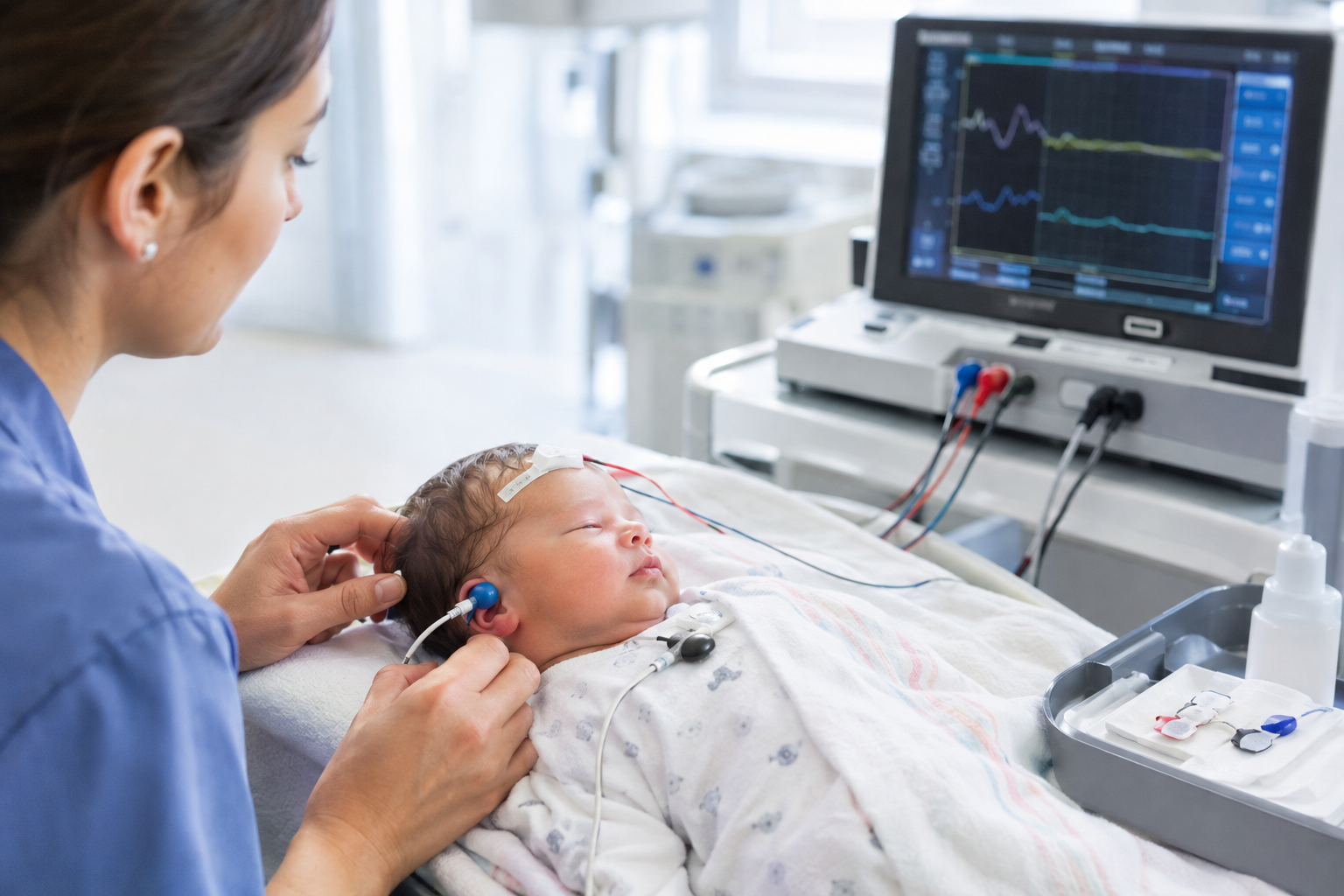
AABR testing measures electrical activity associated with the auditory pathway in response to sound. Small electrodes are placed on the baby’s skin to detect signals that screening equipment processes and evaluates. These electrodes help the device assess whether the infant’s auditory system is responding as expected.
Both methods can be valuable in newborn care. The appropriate approach depends on clinical protocols, the baby’s circumstances, the equipment available, and the screening program’s requirements. Some programs use both methods in sequence, depending on the initial results and the infant’s clinical needs.
Understanding the difference is important when selecting supplies. A facility using OAE equipment primarily needs suitable ear probes and related accessories, while an AABR program must also pay close attention to electrode design, skin contact, cable connections, and electrical signal stability.
Essential Equipment for Newborn Hearing Screening
A dependable screening program requires equipment that works together as a complete system. Even a high-quality screening device may produce unreliable results if accessories are incompatible, sensors are poorly positioned, or the testing environment is unsuitable.
Automated Auditory Brainstem Response Equipment
AABR screening systems deliver acoustic stimuli and measure the resulting electrical responses through surface electrodes. Depending on the system, the equipment may include a screening unit, a sound-delivery component, disposable electrodes or sensor sets, connecting leads, and software that analyzes the recorded signals.
The device should be designed for newborn screening and used according to the manufacturer’s instructions. Healthcare personnel should verify that the equipment is functioning correctly, accessories are approved for the specific model, and routine maintenance and calibration requirements are followed.
Because newborn responses can be small, good signal acquisition is especially important. Appropriate electrodes, secure connections, and suitable preparation of the skin help reduce interference that could otherwise affect recording quality.
Otoacoustic Emissions Equipment
OAE screening equipment typically includes a handheld probe, a speaker, a sensitive microphone, and software that evaluates cochlear emissions. The probe must fit appropriately in the infant’s ear canal to deliver sounds and record the response.
Probe fit and cleanliness are important considerations. Ear canal debris, movement, environmental noise, or an unsuitable probe tip can interfere with measurements. Staff should use approved disposable tips where required and follow the equipment manufacturer’s cleaning and infection prevention procedures.
Since OAE testing does not normally depend on surface electrodes, electrode requirements should not be applied indiscriminately to every newborn hearing screening program. Supplies must match the screening method actually being used.
Supporting Supplies and a Suitable Testing Environment
Other requirements may include disposable gloves, cleaning supplies, approved skin preparation materials, replacement accessories, and documentation tools. The screening area should be sufficiently quiet, and the infant should be settled and comfortable whenever possible.
Movement and muscle activity can affect AABR recordings. Screening while a baby is calm or asleep, when clinically appropriate, can help reduce interference and make the procedure easier to complete.
Healthcare providers should also maintain clear procedures for checking equipment, identifying defective accessories, documenting results, and arranging repeat screening or diagnostic evaluation when indicated.
Why Electrode Size Matters on Newborn Skin
Electrode size is a major consideration in AABR testing because newborns have smaller bodies and more delicate skin than older children and adults. Electrodes intended for adult ECG monitoring may not be suitable for neonatal hearing screening, even if their connectors appear compatible.
The electrode must provide enough conductive contact to capture the intended electrical signal while remaining appropriate for the available skin area. A sensor that is too large may be difficult to position accurately, interfere with nearby electrodes, or increase the area covered by adhesive. An electrode that is too small may provide inadequate contact or become more susceptible to movement, depending on its design and application.
The best size is not necessarily the smallest available option. Instead, healthcare teams should select electrodes specifically intended or validated for the intended neonatal application and follow the screening device manufacturer’s placement instructions.
Positioning also matters. AABR systems generally require electrodes at designated locations, which may include the forehead or scalp and other prescribed sites. Incorrect placement can affect signal quality and may interfere with the device’s ability to complete a reliable screening.
Proper sizing, accurate placement, and compatibility with the screening system work together to support consistent measurements without unnecessary handling of the infant.
Adhesive Gentleness and Neonatal Skin Protection
Newborn skin requires particular care because it is thinner and more vulnerable to injury than mature skin. Adhesive products that are acceptable for routine adult monitoring may not provide the same level of suitability for premature infants or babies with fragile skin.
For this reason, electrode selection should consider adhesive performance as well as skin compatibility. The adhesive needs to keep the sensor in place for the duration of the procedure, but it should also permit removal using the method recommended by the manufacturer without unnecessary pulling or rubbing.
Healthcare teams should evaluate whether an electrode is specifically labeled for neonatal use, whether its instructions address premature or fragile skin, and whether any restrictions apply to its use. Products should not be assumed safe for all newborns simply because they are marketed as gentle or hypoallergenic.
Skin preparation should also be conservative and follow the device instructions and local clinical protocols. Abrasive preparation techniques or unapproved substances may irritate delicate skin and should not be introduced simply to improve contact.
When removing an electrode, trained staff should follow the recommended removal technique and support the surrounding skin as needed. The application site should be checked for irritation or damage, especially when repeated screening attempts are necessary.
Impedance Stability and Reliable Signal Quality
Electrical impedance describes the opposition that an electrical circuit encounters when current flows. In AABR screening, the contact between the electrode and the skin influences how electrical activity is recorded. Stable, appropriate electrode contact helps the system capture signals and distinguish responses from unwanted electrical noise.
Poor contact, dried conductive gel, loose leads, or electrode movement can increase impedance or cause it to fluctuate. These conditions may contribute to noisy recordings, interrupted tests, or repeated screening attempts.
However, lower impedance is not automatically better in every circumstance. The objective is to achieve contact quality within the screening device’s specified operating range while protecting the infant’s skin. Healthcare professionals should follow the device’s impedance guidance rather than using an arbitrary target.
Electrode gel, when included in the product design, can help establish electrical contact. Its composition, distribution, and stability can affect performance throughout the procedure. Pre-gelled electrodes may simplify preparation, but their suitability depends on the screening system, intended application, storage conditions, and manufacturer’s instructions.
Cable management is another important factor. Leads should be connected securely and arranged to minimize pulling or movement at the electrode site. Staff should check connections before testing and investigate equipment alerts or unstable readings according to the screening system’s troubleshooting instructions.
When electrode contact is reliable, the system is better positioned to collect usable signals. Nevertheless, electrode performance alone cannot guarantee a pass result or rule out hearing loss. Screening outcomes must be interpreted within the device’s validated protocol, and babies who do not pass require the recommended follow-up process.
How Newborn Hearing Screening Works in Practice
How newborn hearing screening works in practice and why electrode size, adhesive gentleness, and impedance stability matter so much on neonatal skin. These considerations are central to selecting appropriate supplies for AABR screening and supporting consistent testing procedures.
A typical screening session begins with a review of the equipment, preparation of the testing area, and confirmation that the baby is settled. The screener then follows the manufacturer’s instructions for positioning the earphones or probe and, when required, applying electrodes at the designated locations.
For AABR testing, staff should check electrode contact, lead connections, and the impedance information provided by the device before starting the measurement. If the equipment indicates poor contact or excessive interference, the screener should troubleshoot according to the approved procedure rather than repeatedly restarting the test without identifying the cause.
During the procedure, staff should monitor the baby’s comfort and the condition of the sensors. If the infant becomes unsettled, an electrode loosens, or the testing conditions deteriorate, the screening may need to be paused while the problem is addressed.
After testing, the result should be documented for each ear, along with any necessary recommendations. A result that requires rescreening does not automatically mean the baby has hearing loss. It means the next step in the established screening pathway should be followed.
The American Speech-Language-Hearing Association provides professional guidance on screening procedures, equipment maintenance, staff training, and follow-up systems. <Link url=”https://www.asha.org/Practice-Portal/Professional-Issues/Newborn-Hearing-Screening/” title=”Review the ASHA newborn hearing screening guidance”/> for additional information.
Choosing Electrodes for Neonatal Applications
Healthcare facilities should assess several factors before selecting electrodes for newborn hearing screening. A product that performs well in one monitoring application may not be appropriate for another, so intended use and device compatibility should guide procurement decisions.
Important considerations include:
- Intended application: Confirm that the electrode is approved or specified for the relevant neonatal use and screening system.
- Electrode dimensions: Choose a design that fits the designated placement area and allows accurate positioning.
- Adhesive properties: Evaluate skin compatibility, secure attachment, and the manufacturer’s recommended removal method.
- Conductive performance: Check whether the electrode and any included gel support the contact quality required by the device.
- Connector compatibility: Verify that leads, connectors, and accessories match the screening equipment.
- Shelf life and storage: Follow the stated temperature, packaging, and expiration requirements to maintain product performance.
- Packaging and hygiene: Ensure that disposable products are stored and handled according to infection prevention procedures.
- Product documentation: Review instructions for use, intended patient population, warnings, and applicable regulatory requirements.
Suppliers such as R & D Medical Products operate within the broader medical products market, where material selection and product consistency are important considerations for clinical applications. When evaluating a supplier or electrode product, healthcare organizations should verify the specific product’s intended use, technical documentation, and compatibility rather than assuming that every product in a supplier’s range is suitable for newborn hearing screening.
Quality Control and Staff Training
Consistent results depend on both equipment quality and correct clinical procedures. Even a suitable electrode can produce poor contact if it is stored improperly, applied to an unsuitable site, or connected incorrectly.
Hospitals and clinics should establish written procedures for checking screening equipment, maintaining supplies, inspecting packaging, and removing products that are damaged or expired. Equipment should be calibrated, maintained, and serviced according to the manufacturer’s specifications.
Staff training should cover the differences between OAE and AABR screening, appropriate accessory selection, electrode placement, infection prevention, skin protection, and troubleshooting. Screeners also need to understand how to communicate results clearly to parents and arrange follow-up care when required.
A complete quality assurance program should include documentation of screening outcomes and a reliable process for contacting families when additional testing is needed. The <Link url=”https://www.cdc.gov/hearing-loss-children-guide/parents-guide/newborn-hearing-screening.html” title=”Centers for Disease Control and Prevention guide to newborn hearing screening”/> explains why screening is an important first step in identifying babies who may need further evaluation.
Supporting Safe and Effective Newborn Hearing Screening
Newborn hearing screening plays an important role in early identification of potential hearing difficulties. Appropriate equipment, trained staff, and reliable follow-up procedures help screening programs operate effectively.
For AABR systems, electrode size, adhesive gentleness, conductive performance, and stable skin contact are important parts of the overall testing process. These factors should be considered alongside equipment compatibility, storage conditions, infection prevention, and the manufacturer’s instructions. OAE systems have different accessory requirements and generally do not need skin electrodes.
Healthcare providers and procurement teams can support better screening practices by selecting products designed for the intended application, maintaining equipment correctly, and reviewing performance concerns systematically. Above all, screening results should lead to the appropriate next step, whether that is completion of the screening pathway, rescreening, or a diagnostic hearing evaluation.
When equipment selection and clinical procedures work together, newborn hearing screening can help families access timely information and appropriate support during an important stage of their child’s development.
Frequently Asked Questions
1. What equipment is used for newborn hearing screening?
The two common technologies are otoacoustic emissions (OAE) and automated auditory brainstem response (AABR). OAE equipment uses an ear probe, while AABR equipment uses sound-delivery components, surface electrodes, connecting leads, and a screening unit.
2. Are electrodes required for every newborn hearing screening?
No. AABR screening uses electrodes to record electrical responses associated with hearing. OAE screening measures sounds generated by the inner ear and typically uses a probe placed in the ear canal instead.
3. Why does electrode size matter for newborns?
Electrode size affects positioning, skin coverage, and contact with the skin. Appropriately sized electrodes designed for the intended neonatal application can support reliable signal recording while helping limit unnecessary adhesive coverage.
4. Why is gentle adhesive important for neonatal electrodes?
Newborn skin is delicate and may be vulnerable to irritation or injury. Electrodes should be selected according to their intended use and skin compatibility, and staff should follow the manufacturer’s application and removal instructions.
5. What is impedance stability in newborn hearing screening?
Impedance stability refers to maintaining suitable and consistent electrical contact between the electrode and the skin. Poor or fluctuating contact may contribute to interference, unreliable recordings, and repeated testing.
6. Can poor electrode contact affect AABR results?
Yes. Loose electrodes, unsuitable skin contact, movement, and poor connections can introduce noise or prevent the equipment from obtaining a usable recording. Staff should follow the device’s troubleshooting guidance when contact problems occur.
7. What happens if a newborn does not pass the initial hearing screening?
The next step depends on the screening protocol and clinical circumstances. The baby may need a repeat screening or referral for diagnostic hearing testing. A result that requires follow-up does not, by itself, establish a diagnosis of hearing loss.
8. How often should newborn hearing screening equipment be maintained?
Equipment should be checked, calibrated, and maintained according to the manufacturer’s instructions and the healthcare facility’s policies. Staff should also inspect accessories and confirm that disposable products remain within their stated shelf life.