Well-maintained trees can make an HOA community more attractive, comfortable, and welcoming. From mature shade trees along neighborhood streets to carefully landscaped common areas, trees contribute to curb appeal and create a pleasant environment for residents and visitors. However, trees also require regular care to remain healthy and safe.
For homeowners associations, tree maintenance involves more than occasional trimming. Trees located near roads, sidewalks, playgrounds, entrances, parking areas, and shared amenities need professional attention to reduce potential hazards and maintain the appearance of the community. A consistent tree care plan can also help an HOA address problems before they become costly or disruptive.
Why Tree Care Matters for Alpharetta HOAs
Trees throughout an HOA community are often exposed to changing weather, vehicle traffic, construction activity, pests, and natural aging. Without proper maintenance, dead branches, weak limbs, diseased trees, and overgrown vegetation can create problems.
Routine inspections and professional maintenance allow an HOA to identify potential concerns early. Arborists can assess tree health, recommend appropriate pruning, and determine whether a damaged or declining tree requires removal.
Regular tree care can also contribute to a consistent appearance across the neighborhood. When trees are properly maintained, entrances, streets, sidewalks, and common areas can look cleaner and more organized.
HOA Tree Service in Alpharetta Supports Community Safety
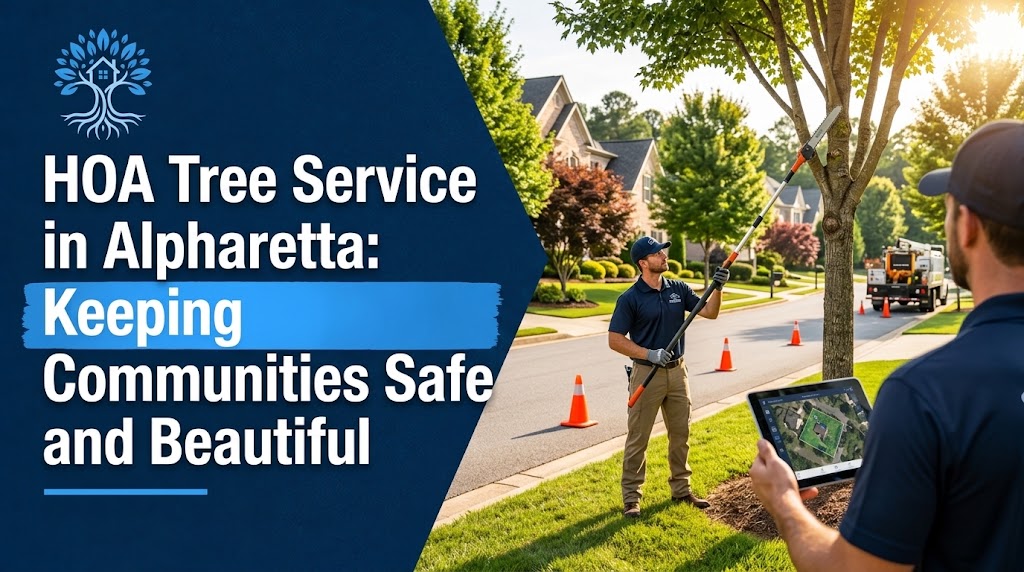
HOA tree service in Alpharetta helps communities maintain safe streets, shared spaces, sidewalks, and landscaped areas. Professional tree care supports a clean, attractive neighborhood while helping prevent tree-related safety concerns.
Trees with dead, cracked, or weakened branches can become particularly concerning during periods of strong wind or severe weather. Branches may fall onto sidewalks, vehicles, roads, fences, or other structures. Regular inspections and pruning can help identify some of these risks before they become emergencies.
Tree maintenance can also improve visibility. Overgrown branches may obstruct street signs, lighting, entrances, security cameras, or drivers’ sightlines. Strategic pruning can help maintain clear views while preserving the health and natural structure of the tree.
Common Tree Services for HOA Communities
An HOA may require several types of tree care depending on the age, size, and condition of its landscaping.
Tree Trimming and Pruning
Pruning removes selected branches to improve tree structure, manage growth, and remove dead or damaged limbs. Professional pruning is especially useful around sidewalks, roads, parking lots, and community entrances.
Improper pruning can damage a tree or create future structural problems, so HOA boards should consider using experienced tree professionals for larger or more complicated projects.
Tree Removal
Sometimes a tree becomes too damaged, diseased, unstable, or poorly positioned to remain safely in place. In these situations, removal may be necessary.
Tree removal can be particularly challenging in an HOA because trees may be located near homes, parked vehicles, utility lines, sidewalks, or shared facilities. Professional crews have the equipment and experience needed to plan removal carefully and minimize disruption.
Storm Damage Cleanup
Severe weather can leave broken limbs and fallen trees throughout a community. Prompt cleanup helps restore access to roads, sidewalks, and common areas.
Having a relationship with a professional tree service before a major storm can help an HOA respond more efficiently when urgent tree problems occur.
Stump Grinding
After a tree is removed, the remaining stump can interfere with landscaping and create an obstacle for residents. Stump grinding can reduce the visible portion of the stump and make the area easier to maintain.
This service can also help an HOA prepare the area for new landscaping or future improvements.
Maintaining Attractive Common Areas
The appearance of an HOA community can influence how residents and visitors experience the neighborhood. Trees are a major part of that visual environment.
Consistent pruning can help trees maintain a balanced appearance while keeping pathways and common areas accessible. Removing dead branches and addressing declining trees can also make landscaped areas look cleaner.
HOA tree maintenance should ideally be incorporated into a broader landscape management plan. This can include regular inspections, seasonal pruning, storm preparation, tree removal when necessary, and monitoring for signs of disease or pest problems.
Creating a Proactive HOA Tree Maintenance Plan
Waiting until a tree becomes an emergency can make maintenance more expensive and disruptive. A proactive plan gives an HOA an opportunity to address tree concerns on a scheduled basis.
Schedule Regular Tree Inspections
Periodic inspections can help identify dead branches, structural weaknesses, disease symptoms, and other concerns. Keeping records of inspections can also help HOA boards track recurring problems and plan future work.
Prioritize High-Traffic Areas
Trees near sidewalks, roads, playgrounds, parking lots, entrances, and recreational facilities deserve particular attention. These areas have more potential for tree-related issues to affect residents and visitors.
Plan Seasonal Maintenance
Different times of year can present different tree care needs. An HOA can work with a professional tree service to establish a maintenance schedule based on local conditions and the needs of the community’s trees.
Communicate With Residents
Tree work can temporarily affect parking, sidewalks, roads, or access to shared spaces. Providing residents with advance notice can reduce confusion and make scheduled projects easier to manage.
Choosing a Professional HOA Tree Service
When selecting a tree service for an HOA community, the board should consider experience with larger properties and shared spaces. Professional crews should understand safe tree work practices and have appropriate equipment for the project’s requirements.
It is also useful to ask about insurance, estimates, cleanup procedures, scheduling, and emergency response. Clear communication is especially important when multiple buildings, streets, and common areas are involved.
An HOA can also benefit from establishing an ongoing relationship with a reliable tree care provider instead of arranging services only when problems occur. A long-term approach makes it easier to monitor tree health and maintain consistent community standards.
FAQs About HOA Tree Service in Alpharetta
How often should an HOA have its trees inspected?
The appropriate schedule depends on the types, ages, and conditions of the trees. Regular professional inspections can help an HOA identify developing issues and determine when maintenance is needed.
Can HOA tree service help after a storm?
Yes. Professional tree crews can assess storm-damaged trees, remove fallen branches and trees, and help clear affected areas. Emergency situations may require prompt evaluation to address immediate hazards.
Why is professional tree trimming important?
Professional trimming helps remove problematic branches while preserving the tree’s structure and health. Improper cutting can cause unnecessary damage and may create future maintenance concerns.
Should an HOA remove every damaged tree?
Not necessarily. The appropriate action depends on the tree’s condition, location, structural stability, and potential risk. A qualified tree professional can assess the situation and recommend suitable options.
How can tree maintenance improve an HOA community?
Regular tree maintenance can support safer shared spaces, improve visibility, protect landscaping, and maintain a consistent appearance throughout the neighborhood.
Conclusion
Trees are valuable features of Alpharetta HOA communities, but they require ongoing attention to remain healthy, attractive, and appropriately managed. From routine pruning and inspections to storm cleanup, stump grinding, and tree removal, professional services can help HOA boards address tree-related needs throughout the year.
A proactive approach allows communities to identify potential problems before they become emergencies while maintaining attractive streets, sidewalks, entrances, and shared spaces. With a well-planned tree care program and dependable professional support, HOAs can protect their landscapes and create a safer, more welcoming environment for residents and visitors.