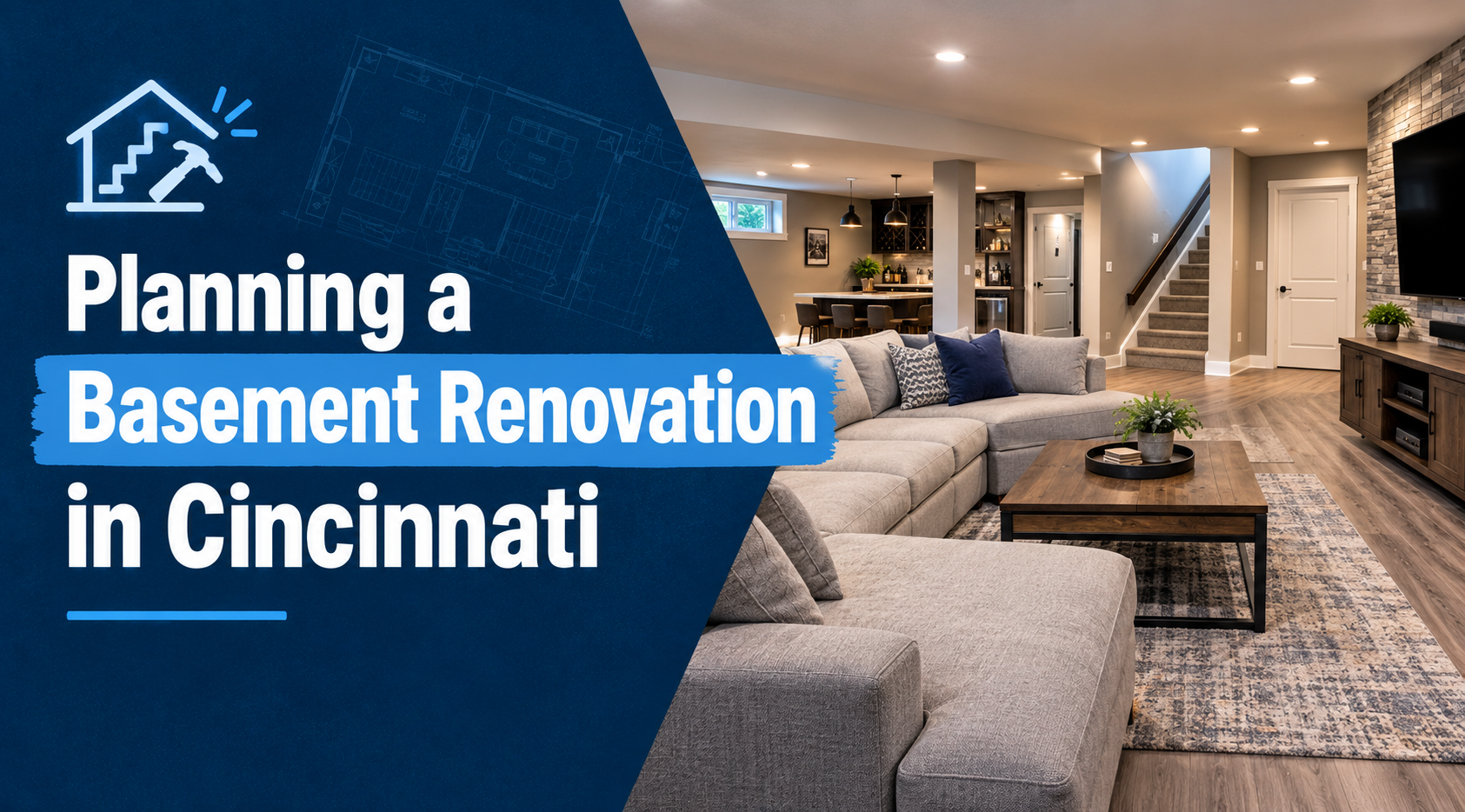
A basement can be one of the most useful spaces in a Cincinnati home. Whether it is currently used for storage, laundry, or simply left unfinished, the right renovation can transform it into a comfortable and functional extension of your living space. However, successful basement projects require careful planning, especially when it comes to layout, moisture control, lighting, insulation, and local building requirements.
Planning ahead allows homeowners to make thoughtful decisions before construction begins. From defining the purpose of the space to selecting finishes and establishing a realistic budget, each step contributes to a smoother renovation.
Define Your Basement Renovation Goals
The first step is deciding how you want to use your basement. A clear purpose helps determine the layout, materials, lighting, plumbing, and electrical requirements.
Consider How Your Family Will Use the Space
A finished basement can serve many purposes. Homeowners may create a family room, home theater, guest suite, children’s playroom, home office, fitness area, or entertainment space. Some Cincinnati homeowners may also want a combination of these functions.
Think about your family’s current needs as well as how those needs may change in the future. Flexible spaces can provide greater long-term value because they can adapt as your lifestyle changes.
Evaluate the Existing Layout
Before choosing furniture or finishes, examine the basement’s current structure. Look at support columns, ceiling height, stairs, windows, mechanical equipment, plumbing locations, and existing walls.
These features can affect the final floor plan. Working around them rather than trying to eliminate every structural obstacle can sometimes create a more practical and cost-effective design.
Address Moisture and Foundation Concerns
Moisture should be a major consideration when planning a basement renovation in Cincinnati. Basements are below ground level, which makes them more susceptible to water intrusion, humidity, and condensation.
Inspect for Existing Problems
Look for signs such as musty odors, damp walls, water stains, peeling paint, mold growth, or standing water. These problems should be addressed before covering walls or installing finished flooring.
Depending on the situation, improvements may involve drainage, waterproofing, sump pump systems, grading, or repairs to foundation areas. Resolving moisture concerns early helps protect the finished renovation.
Choose Appropriate Materials
Basement materials should be selected with the environment in mind. Moisture-resistant drywall, suitable insulation, durable flooring, and properly sealed surfaces can help create a more resilient finished space.
Discuss material choices with your remodeling professional so the products are appropriate for the specific conditions of your basement.
Create a Functional Floor Plan
A good floor plan makes the basement comfortable and easy to use. Consider traffic flow, furniture placement, storage, natural light, and access to utilities.
Plan for Multiple Activities
If your basement will serve several purposes, divide the space into functional zones. For example, one area could serve as a television room while another becomes a play area or home office.
Open layouts can make smaller basements feel larger, while partial walls, furniture placement, or built-in storage can create separation without making the space feel closed in.
Include Practical Storage
Storage is often overlooked during basement renovations. Built-in cabinets, shelving, closets, and storage beneath stairs can help keep the finished space organized.
Planning storage from the beginning also reduces the temptation to fill attractive living areas with bulky storage containers later.
Improve Lighting and Comfort
Many Cincinnati basements have limited natural light. A thoughtful lighting plan can make a significant difference in how the finished room feels.
Combine Different Types of Lighting
Use a combination of ambient, task, and accent lighting. Recessed fixtures can provide general illumination, while wall lighting, lamps, or under-cabinet fixtures can brighten specific areas.
If the basement has windows, keep them unobstructed whenever possible. Light-colored walls and strategically placed mirrors can also help reflect available natural light.
Consider Insulation and Temperature Control
Comfort should be considered throughout the year. Proper insulation can help regulate indoor temperatures and improve energy efficiency. Heating and cooling requirements should also be evaluated as part of the renovation plan.
Your contractor can assess the existing HVAC system and determine whether additional solutions are necessary for the finished basement.
Establish a Realistic Renovation Budget
A basement renovation budget should account for more than flooring, paint, and furniture. Structural work, waterproofing, electrical updates, plumbing, insulation, permits, fixtures, and labor can all affect the final cost.
Create a detailed project budget before construction starts. It is also wise to maintain a contingency amount for unexpected conditions discovered after walls or floors are opened.
Getting estimates from qualified remodeling professionals can help you understand the potential scope of your project and prioritize features according to your budget.
Understand Cincinnati Building Requirements
Basement remodeling may involve electrical, plumbing, structural, fire safety, or egress considerations. Requirements can vary depending on the type of renovation and how the space will be used.
Think About Egress and Safety
If you plan to create a basement bedroom, emergency escape requirements become especially important. Windows, doors, stairways, smoke detectors, and other safety features should be evaluated as part of the design.
Always discuss applicable permit and code requirements with your contractor and the appropriate local authorities before construction begins.
Choose Durable Finishes
The right finishes can give your renovated basement a polished appearance while supporting everyday use.
For flooring, homeowners may consider options such as luxury vinyl, tile, engineered materials, or other products appropriate for basement environments. Wall colors, trim, cabinetry, countertops, and lighting fixtures should work together to create a consistent design.
A basement renovation modernizes older Cincinnati basements into inviting living areas. Choosing durable finishes and thoughtful design elements can help create a space that is comfortable, attractive, and suited to your household’s needs.
Work With an Experienced Remodeling Professional
Professional guidance can make basement renovations easier to manage. An experienced contractor can help evaluate the existing space, develop a practical layout, coordinate trades, identify potential problems, and manage construction.
Before hiring a contractor, review their experience with basement projects, communication process, project scope, references, and contract details. Clear expectations at the beginning can help prevent misunderstandings later.
FAQs About Planning a Basement Renovation in Cincinnati
How long does a basement renovation take?
The timeline depends on the basement’s size, existing condition, design complexity, required permits, and scope of construction. A simple finishing project may take less time than a renovation involving bathrooms, bedrooms, extensive electrical work, or structural changes.
Should moisture problems be fixed before remodeling?
Yes. Water intrusion, excessive humidity, leaks, or other moisture issues should be addressed before finishing the space. Covering an unresolved problem can lead to damage and additional repair costs later.
Can I add a bathroom to my basement?
A basement bathroom may be possible depending on existing plumbing, drainage, ceiling height, and the home’s layout. A professional can evaluate the space and determine what plumbing modifications may be required.
What flooring is suitable for a Cincinnati basement?
The best choice depends on the basement’s moisture conditions, intended use, and design preferences. Moisture-resistant and durable flooring options are commonly considered for basement environments.
Is a permit required for basement remodeling?
Some renovation work may require permits, particularly projects involving structural changes, electrical systems, plumbing, bedrooms, or other regulated improvements. Confirm requirements with the appropriate local authorities before starting construction.
Conclusion
Planning a basement renovation in Cincinnati starts with understanding how you want to use the space and evaluating the condition of the existing basement. Moisture protection, layout, lighting, insulation, storage, safety, materials, and budget should all be considered before construction begins.
With careful planning and professional guidance, an underused basement can become a comfortable and functional part of your home. Taking the time to make informed decisions before work begins can help create a finished space that serves your family for years.