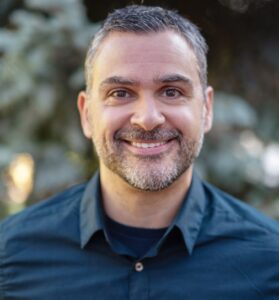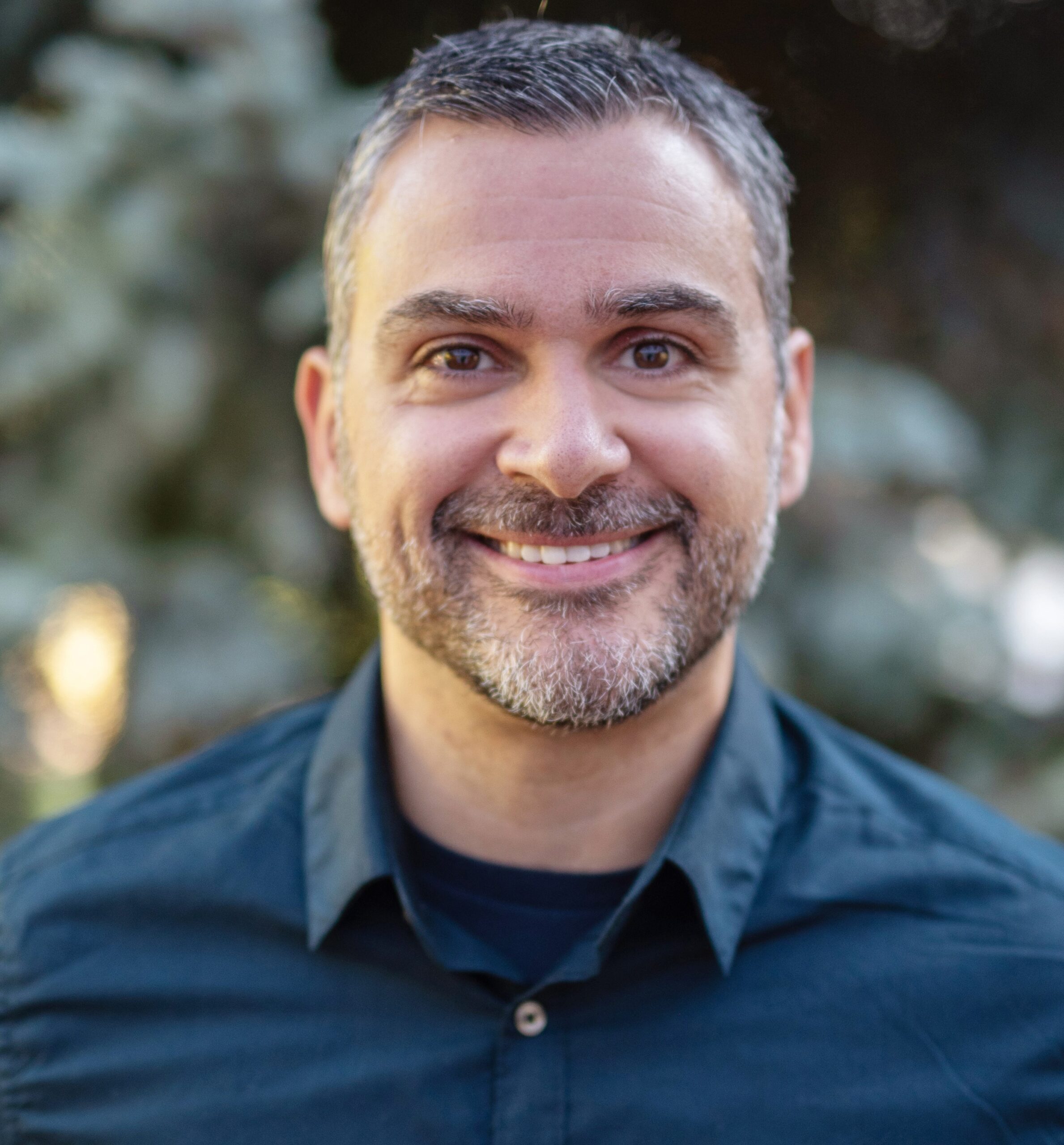
Pastoral leadership is typically measured in Sunday attendance figures, baptisms, and outreach miles. Those metrics matter. But behind every functioning ministry is a more immediate reality: a household. A marriage. Children who grow up watching their parent pour time and energy into other people’s lives.
For Andrew Farhat, lead pastor of St. John’s Lutheran Church and School in Denver, the work of leading a congregation and the work of raising a family are not competing obligations. They are, in his view, two expressions of the same calling.
The Immigrant Foundation: What His Parents Modeled
Farhat’s understanding of family did not begin in a seminary classroom. It began in Lake City, Seattle, where his parents — Bill and Ferial Farhat — had resettled after fleeing Lebanon during the civil war. They arrived in the Pacific Northwest without proximity to wealth or institutional support. What they brought was a commitment to building something durable in a new country.
That story — of people who left everything to give their children better options — shaped how Farhat thinks about sacrifice, long-term investment, and the kind of stability that does not depend on favorable circumstances. His parents’ decision to leave Lebanon was not strategic. It was an act of faith in a future they could not fully see.
That instinct runs through everything he does now as a pastor and a father.
Why Pastors Who Neglect Their Families Undermine Their Message
Farhat has spoken directly about his passion for families — not as a programmatic initiative, but as a theological conviction. The church, in his view, is not a replacement for the family. It is a community that forms, supports, and sustains families over time.
A pastor who neglects his own household while building an impressive ministry has, in a meaningful sense, produced a contradiction. The credibility of a leader in the congregation begins at home. This is not a novel idea — it is embedded in the pastoral letters of the New Testament. But it is one that modern ministry culture, with its emphasis on growth metrics and platform expansion, can quietly erode.
Farhat’s approach pushes against that drift. His wife, Daisy, has been a collaborative partner in his ministry, co-hosting the Transformed podcast alongside him and members of the St. John’s staff from 2022 to 2024. The show ran approximately 90 episodes. That kind of sustained, visible collaboration does not happen without a foundation of genuine partnership.
Four Children and a Full Calendar: The Practical Reality
Farhat and Daisy have four children. That is a household with its own demands — meals, homework, practices, conversations that cannot be rescheduled. Running a multisite congregation that reaches more than 500,000 people annually and maintains mission partnerships in 10 countries generates its own competing pressures.
How a leader manages that tension — not just philosophically, but operationally — is a question Farhat does not sidestep. The Transformed podcast, in part, addressed precisely these kinds of tensions: how faith shapes family life, how marriage holds under pressure, how parents pass something of substance on to their children.
The planned launch of a new podcast in 2026 — built around five-minute biblical encouragements — reflects a continued commitment to meeting families where they are. Brief, usable, and oriented toward daily life rather than Sunday morning performance.
Passion for Families as a Ministry Organizing Principle
At St. John’s, passion for families is one of three core commitments Farhat returns to consistently, alongside passion for sharing the Gospel and passion for outreach. These three are not independent tracks. They reinforce each other.
A church serious about outreach reaches families. A church serious about the Gospel forms them. A church serious about families creates the conditions in which the next generation encounters faith as something real and livable — not merely inherited or performed.
This is the long game of pastoral ministry, and Farhat plays it deliberately. His work in Roseburg, Oregon — where he stabilized a financially struggling congregation, restructured its leadership, and refocused its energy within a single year — demonstrated an ability to bring order to difficult situations. But his stated passions suggest the goal was never institutional stabilization for its own sake. It was clearing the ground so that families could flourish in a community worth belonging to.
What Denver Looks Like From Inside a Parsonage
Denver is a city in rapid transition — growing population, shifting demographics, rising costs, and a cultural landscape that is simultaneously religious and skeptical. Leading a multisite church in that environment means navigating questions that go far beyond Sunday programming.
Farhat does this while living as a neighbor, a husband, and a father in the same city. That proximity matters. It shapes how he reads the congregation’s needs, how he understands what families in Denver are actually navigating, and how he structures a ministry meant to serve people whose lives do not fit neatly into any single demographic category.
The church that reaches 500,000 people annually with the Gospel does not do so by accident. It does so because its leadership is close enough to the ground to know what people need — and far-sighted enough to build something that outlasts any single season.
The Ministry a Family Makes Possible
There is a version of pastoral leadership that treats family as a liability — a source of distraction from the real work. Farhat operates from a different premise entirely. The family is not an obstacle to ministry. It is, in many respects, its most immediate context.
The habits formed at a kitchen table — presence, patience, honesty, the willingness to repair what is broken — are the same habits that make a pastor worth trusting on a Sunday morning. The credibility Farhat has built at St. John’s over years of difficult and steady work is inseparable from the personal story behind it: immigrant parents who modeled sacrifice, a marriage built around shared purpose, and four children watching their father take the things he preaches seriously.
That is not a program. It is not a platform. It is the quiet foundation on which everything else stands.
About Andrew Farhat
Andrew Farhat is the lead pastor of St. John’s Lutheran Church and School in Denver, Colorado, a multisite congregation that reaches more than 500,000 people with the Gospel annually and maintains mission partnerships in 10 countries. He holds a Master of Divinity from Concordia Seminary in St. Louis and a bachelor’s degree in electrical engineering from the University of Washington. Farhat is the co-host of the Transformed podcast and is developing a new short-form biblical encouragement podcast for launch in 2026. He lives in Denver with his wife, Daisy, and their four children.