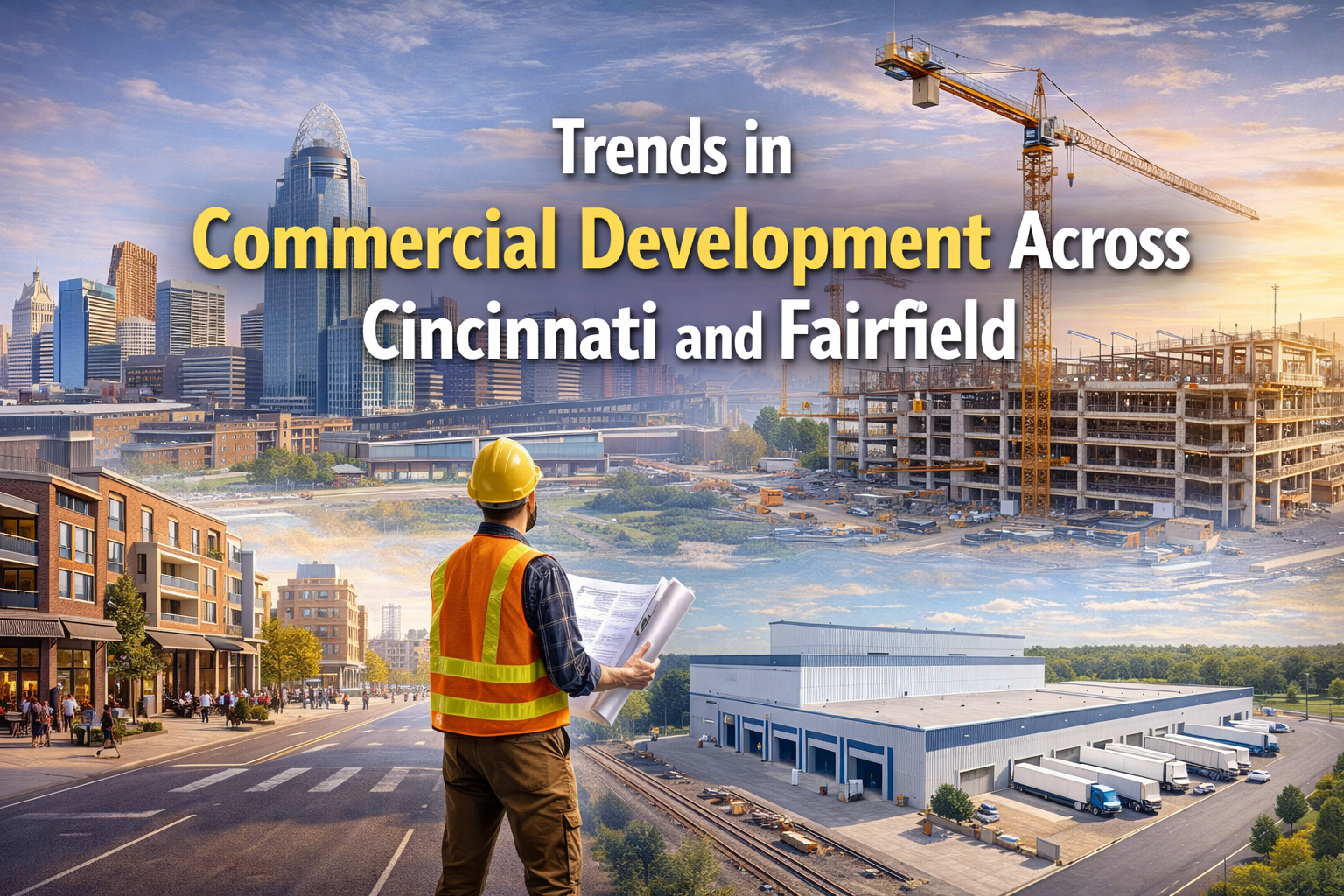
Commercial development across Cincinnati and Fairfield continues to evolve as population growth, infrastructure investment, and shifting business needs reshape the region. From mixed use developments to expanded industrial facilities, the area is experiencing steady momentum driven by both local and regional demand.
As developers, investors, and business owners look ahead, understanding current commercial development trends is essential. These trends influence site selection, construction planning, timelines, and long term returns. Cincinnati and Fairfield are uniquely positioned to benefit from strategic development that supports economic growth while meeting modern expectations.
Increased Demand for Mixed Use Developments
One of the most visible trends across Cincinnati and Fairfield is the rise of mixed use commercial projects. Developments that combine retail, office, residential, and dining spaces are becoming more common as communities seek walkable and efficient environments.
These projects maximize land use while creating built in foot traffic for businesses. Mixed use developments also align with changing consumer preferences that prioritize convenience and accessibility. For developers, this trend presents opportunities to create spaces that attract both tenants and long term investment.
Construction teams working on these projects must coordinate multiple building uses, making experienced commercial contractors essential.
Expansion of Industrial and Logistics Facilities
Industrial development continues to grow throughout the region, particularly in Fairfield where access to major highways supports logistics and distribution operations. Warehousing, manufacturing, and fulfillment centers are expanding to meet supply chain demands.
Cincinnati’s central location within the Midwest makes it an attractive hub for industrial growth. As e commerce and regional distribution increase, developers are prioritizing large scale facilities with efficient layouts and modern infrastructure.
This growth places greater emphasis on construction efficiency, zoning compliance, and future scalability.
Focus on Sustainable and Energy Efficient Buildings
Sustainability is no longer optional in commercial development. Across Cincinnati and Fairfield, developers are increasingly incorporating energy efficient systems, sustainable materials, and environmentally responsible designs.
Features such as improved insulation, energy efficient lighting, and smart building technologies help reduce operating costs while meeting regulatory expectations. Many tenants now actively seek properties that align with sustainability goals, making green building a competitive advantage.
Commercial construction partners play a critical role in integrating these features during the build process.
Adaptive Reuse and Redevelopment Projects
Rather than starting from the ground up, many developers are turning to adaptive reuse projects. Converting older buildings into modern commercial spaces allows communities to preserve character while revitalizing underutilized properties.
Cincinnati, with its historic architecture, is especially well suited for redevelopment initiatives. Fairfield has also seen renewed interest in transforming existing structures to meet current commercial needs.
These projects often require specialized construction expertise to navigate structural challenges, code updates, and design constraints.
Infrastructure Improvements Driving Growth
Ongoing infrastructure investments are supporting commercial development throughout the region. Road improvements, utility upgrades, and expanded transportation access make new projects more feasible and attractive.
As infrastructure expands, surrounding commercial zones often experience increased interest from developers. This creates opportunities for retail centers, office parks, and industrial facilities to grow alongside improved accessibility.
Strategic planning and coordination with local authorities are key to successful project execution.
The Role of Experienced Commercial Contractors
With commercial projects becoming more complex, the importance of experienced construction leadership continues to grow. Developers increasingly rely on contractors who understand regional regulations, permitting processes, and market demands.
Many projects across Cincinnati and Fairfield benefit from working with firms that also serve nearby markets, such as a General contractor Dayton Ohio, who brings regional expertise and operational consistency to large scale commercial builds.
Strong contractor partnerships help projects stay on schedule, manage costs, and meet quality expectations.
Frequently Asked Questions
What types of commercial development are growing in Cincinnati and Fairfield?
Mixed use developments, industrial facilities, and redevelopment projects are among the fastest growing commercial sectors in the region.
Why are mixed use developments popular in this area?
They create walkable environments, maximize land use, and attract businesses by combining multiple functions in one location.
How is sustainability impacting commercial construction?
Developers are prioritizing energy efficiency and environmentally responsible materials to reduce costs and meet tenant expectations.
Are redevelopment projects common in Cincinnati?
Yes. Adaptive reuse of older buildings is a growing trend due to Cincinnati’s historic structures and urban revitalization efforts.
Why is choosing the right contractor important for commercial projects?
Experienced contractors help manage complexity, ensure compliance, and deliver projects efficiently and on budget.
Conclusion
Commercial development across Cincinnati and Fairfield reflects broader economic growth and changing business needs. From mixed use projects and industrial expansion to sustainable design and redevelopment, the region continues to attract investment and innovation.
Understanding these trends allows developers and business owners to make informed decisions that support long term success. With careful planning and the right construction partners, commercial projects in this region can deliver lasting value. As development continues to evolve, working with experienced professionals ensures projects meet today’s demands while preparing for future growth.