Trees add beauty, shade, privacy, and value to properties throughout Dade City, Florida. However, trees can also become safety concerns when they develop structural weaknesses, diseases, damaged branches, or unstable root systems. Understanding how to identify and manage risk trees is an important part of responsible property ownership.
Florida weather can create additional challenges for trees. Strong winds, heavy rain, lightning, tropical storms, and hurricanes can weaken trees over time. Property owners who recognize warning signs early can often address problems before they result in property damage or personal injury.
What Is a Risk Tree?
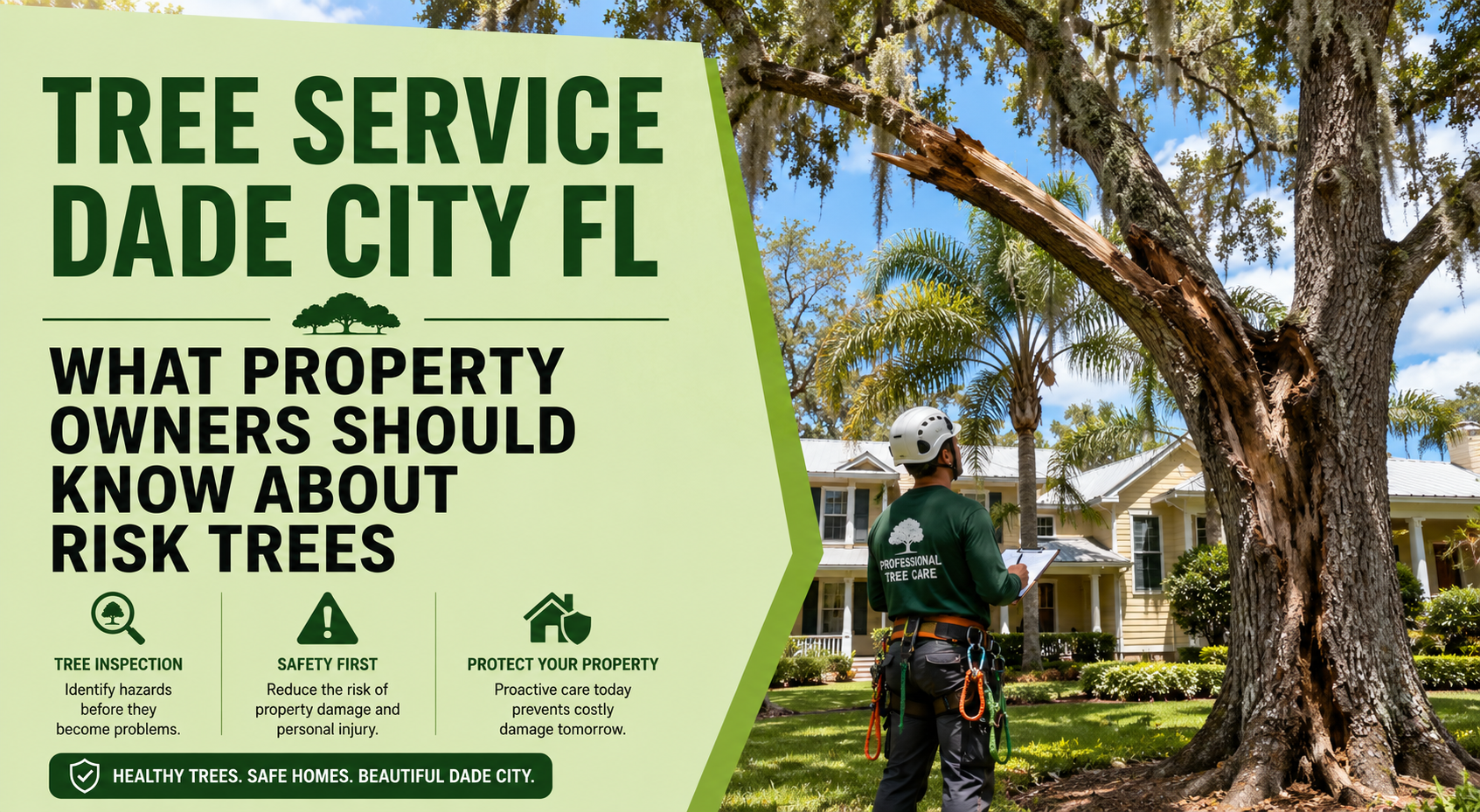
A risk tree is a tree that has characteristics that could potentially cause harm or property damage if it fails. The presence of a defect does not necessarily mean a tree must be removed. Instead, the level of risk depends on the tree’s condition, location, size, and what could be affected if a branch or the entire tree falls.
For example, a large tree with dead branches located beside a home may present more concern than a similar tree standing in an open area away from buildings and people.
Common Signs of a Risk Tree
Property owners should regularly look for visible warning signs, including:
- Large dead or broken branches
- Cracks in major limbs or the trunk
- Hollow or decayed areas
- Leaning that appears to have developed recently
- Exposed or damaged roots
- Fungal growth around the base
- Cavities or deep wounds
- Loose or hanging branches
- Significant trunk splitting
- Soil movement around the root system
These conditions do not automatically mean a tree is unsafe. However, they can indicate that a professional inspection may be appropriate.
Why Florida Weather Can Increase Tree Risks
Dade City properties are exposed to weather conditions that can place considerable stress on trees. High winds can break weak branches or cause unstable trees to fall. Heavy rainfall can saturate soil and potentially reduce root stability.
Hurricanes and tropical storms can also expose existing tree weaknesses. A tree that appears healthy during calm weather may have hidden structural problems that become more serious during severe conditions.
Storm Damage Can Reveal Hidden Problems
After a major storm, property owners should inspect trees for broken limbs, split trunks, hanging branches, and changes in their position. Even when damage appears minor, broken branches can create hazards.
Trees that have been damaged should be evaluated carefully, particularly when they are close to houses, garages, driveways, fences, utility lines, or areas where people regularly walk.
The Importance of Professional Tree Inspections
Property owners may be able to identify obvious problems, but some tree defects are difficult to recognize without professional experience. Internal decay, root problems, structural weaknesses, and disease may not always be visible from the ground.
A professional tree inspection can help determine whether a tree should be pruned, monitored, treated, or removed. It can also help property owners prioritize urgent problems and plan routine maintenance.
Understanding Which Trees Need Attention
Tree service dade city fl can help property owners understand which trees need trimming, monitoring, treatment, or removal for safety reasons.
An inspection should consider more than the tree itself. Professionals can also evaluate the surrounding environment, including buildings, power lines, roads, sidewalks, play areas, and other targets that could be damaged if the tree fails.
When Trimming May Be Enough
Not every risk tree needs to be removed. Proper pruning can sometimes address specific hazards, such as dead branches, damaged limbs, or branches that interfere with structures.
Benefits of Proper Tree Trimming
Professional trimming can help:
- Remove dead or hazardous branches
- Reduce excessive branch weight
- Improve tree structure
- Remove branches damaged by storms
- Improve clearance around structures
- Reduce interference with certain areas of the property
However, improper pruning can weaken a tree or encourage future problems. Property owners should avoid excessive cutting or removing large structural branches without professional guidance.
When Tree Removal May Be Necessary
Removal may become the safest option when a tree has severe structural problems, extensive decay, significant storm damage, or an unstable root system.
A tree may also require removal when it poses a serious hazard that cannot be reasonably corrected through pruning or other treatments.
Location Matters
A tree’s location can significantly influence its risk level. A failing tree beside a house, driveway, or frequently used outdoor area presents a greater potential consequence than one located in an isolated part of a large property.
Property owners should consider both the condition of a tree and what could be affected if it fails.
How Property Owners Can Reduce Tree Risks
Routine maintenance is one of the best ways to reduce avoidable tree hazards. Property owners should monitor trees throughout the year and pay particular attention after severe weather.
Schedule Regular Assessments
Regular inspections can help identify developing problems before they become emergencies. Property owners should consider professional assessments for mature trees, trees near structures, and trees showing visible signs of decline.
Address Storm Damage Promptly
Broken or hanging branches should not be ignored. After a storm, keep people away from damaged areas until the situation has been assessed. Be especially cautious around trees near electrical lines, as damaged utility lines can create serious hazards.
Avoid DIY Work on Large Trees
Removing large branches or attempting to cut down a mature tree can be dangerous. Specialized equipment, experience, and knowledge of tree structure may be necessary to complete the work safely.
Frequently Asked Questions
How can I tell if a tree is dangerous?
Warning signs may include dead branches, cracks, decay, exposed roots, significant leaning, cavities, fungal growth, or major storm damage. A professional inspection is recommended when the condition of a tree is uncertain.
Does a leaning tree always need to be removed?
No. Some trees naturally grow at an angle and may remain stable. However, a sudden or increasing lean, especially when combined with root damage or soil movement, may indicate a serious problem.
Should I remove a tree with dead branches?
Not necessarily. Dead branches can often be removed through proper pruning. The overall health, structure, size, and location of the tree should be considered before deciding on removal.
When should trees be inspected after a storm?
Trees should be checked as soon as it is safe to do so after significant storms. Look for broken limbs, hanging branches, trunk damage, exposed roots, and changes in the tree’s position.
Can tree maintenance prevent all tree-related accidents?
No maintenance program can eliminate every possible risk. However, regular inspections, appropriate pruning, storm assessments, and timely removal of severely hazardous trees can substantially reduce preventable risks.
Conclusion
Risk trees deserve careful attention from Dade City property owners. Problems such as decay, damaged branches, unstable roots, cracks, and structural weaknesses can become more serious when exposed to Florida’s severe weather.
The best approach is to identify potential problems early and determine the appropriate solution. Depending on the tree’s condition, that solution may involve pruning, treatment, monitoring, or removal. Professional tree services can provide valuable guidance when property owners are unsure about the condition or safety of a tree.
By maintaining trees regularly and addressing warning signs promptly, property owners can protect their homes, outdoor spaces, and everyone who uses the property while preserving the benefits that healthy trees provide.