A familiar piece of music can reveal a quiet instrumental line or a change in rhythm when a listener gives it sustained attention. What was once part of the background becomes something to follow from its first notes to its end. This close engagement with music offers a starting point for considering attention alongside contemplative practice.
Lotus Ocean, the body of work created by Prashant Trivedi, a Vedic Guru, author, linguist, audio-visual artist, filmmaker, and scholar, includes both original music and contemplative practice. Its LotusOcean Meditation groups meet around the world, in person and online.
Listening to Musical Detail
Music can accompany other activities, provide a setting for a gathering, or become the subject of attention in its own right. In the last case, a listener might notice how a melody develops, when another instrument enters, or how a pause separates one phrase from the next.
Those details are not limited to quiet or slow music. A full-band performance can bring several parts together at once, while an improvised passage can develop through choices made as musicians play. A listener may follow one part for a time, then notice how it relates to the rest of the performance.
A repeating rhythm can provide a reference point as other parts change around it. When the rhythm pauses or returns, the listener has another way to follow the structure of the piece without needing to identify every instrument. A change in tempo can similarly draw attention to a new passage.
A composition with words offers another point of attention: a listener can follow the language while hearing how the voice relates to the arrangement. An instrumental piece offers its own details, including changes in melody, rhythm, and texture. A repeated line can take on a different emphasis when a singer changes its phrasing or places it against a different instrumental passage.
Prashant Trivedi creates and produces original music for Lotus Ocean. His LotusOcean Music catalogue spans full-band rock, improvisational works, and meditative performances. It also includes audio-visual artworks, combining sound with visual expression.
Lotus Ocean presents the music as an experiential medium connected with reflection, inner development, and a relationship with nature. Those concerns also have a place in the contemplative practice within his wider work.
LotusOcean Meditation and Awareness Within Lotus Ocean
LotusOcean Meditation is a contemplative practice developed to support presence, centering, self-awareness, and a deeper sense of connection. In its account of awareness, the individual is part of a wider living world that includes nature and the Earth. Lotus Ocean describes centering as alignment and participation within that wider whole, connecting inner development with engagement in daily life.
Groups practice LotusOcean Meditation across geographic and cultural contexts, both in person and online. In-person participants share a physical setting, while online participants join from separate locations. Participants in Lotus Ocean’s practice have described increased calmness, groundedness, and a stronger connection with nature. Those accounts reflect individual experiences of a practice that places the person in relation to the surrounding world.
LotusOcean Meditation’s emphasis on participation extends to daily responsibilities. For Lotus Ocean, cultivating awareness is connected with how people communicate, make decisions, and respond to difficulty. Its philosophy sees personal development as expressed through those activities. Clarity and focus within daily responsibilities are among the practice’s stated aims.
Within Lotus Ocean, the contemplative approach of LotusOcean Meditation and the original musical catalogue form part of a broader exploration of consciousness and human development. The music offers an experience through listening, while the practice encourages presence, centering, and self-awareness. The wider approach also encourages direct inquiry and personal discovery.
Music, Setting, and the Wider Work
At a live performance, the music unfolds in a shared physical space. Improvising musicians can respond to one another during the performance, making choices as the piece develops. A recording allows the work to be heard again after that occasion, in a different setting.
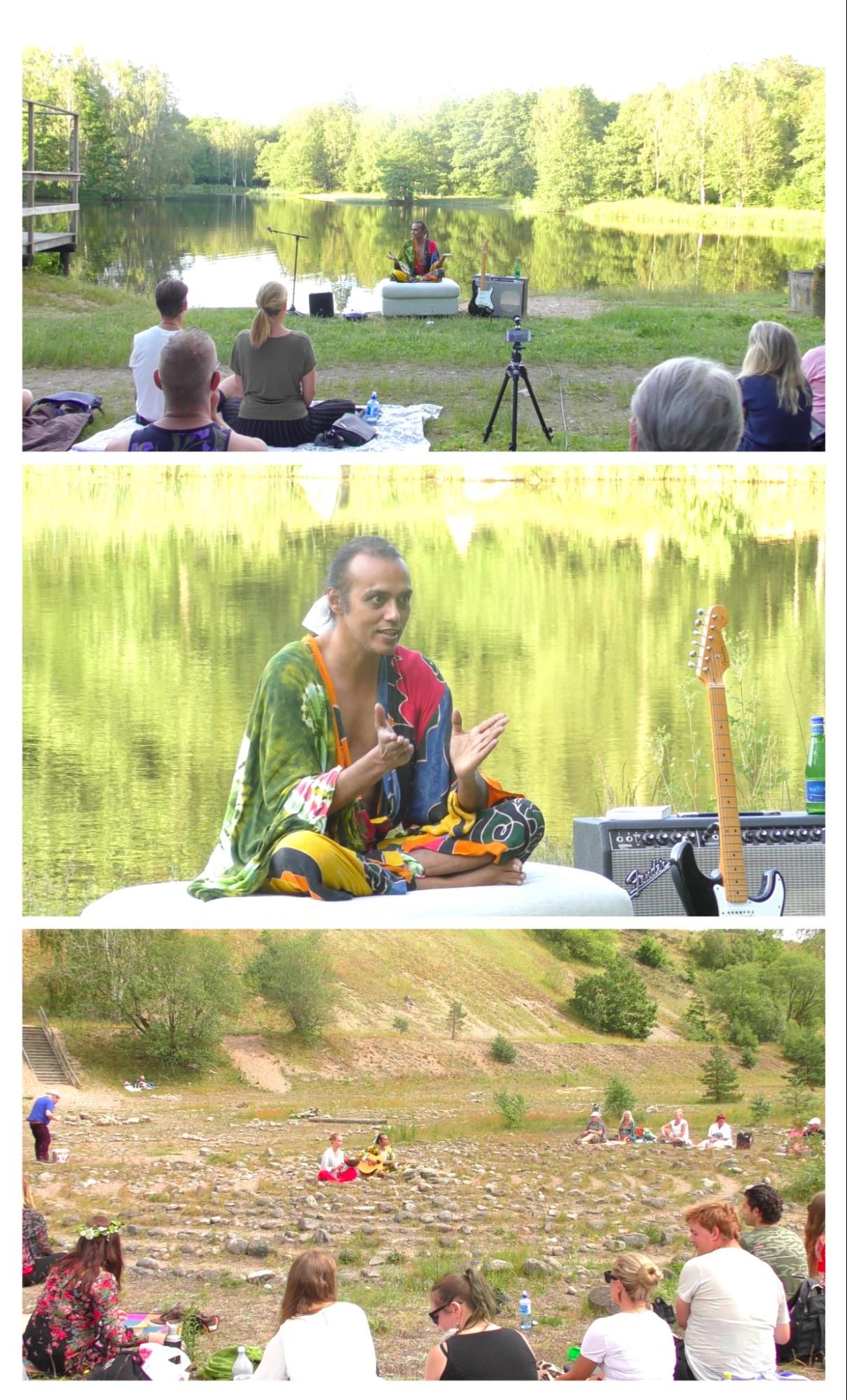
LotusOcean Music includes meditative concerts performed in natural environments. The outdoor setting reflects the attention Lotus Ocean gives to humanity’s relationship with nature.
The music catalogue is available through YouTube, Spotify, and Bandcamp. A recording gives a listener the opportunity to revisit a passage and hear how it relates to what comes before and after it. Audiovisual works add images to the music, offering another way to encounter a performance.
Prashant Trivedi’s published works offer another way to engage with the wider body of ideas. The Rahu Ketu Experience (2002) and The Book of Nakshatras: A Comprehensive Treatise on the 27 Constellations (2005) belong to Jyotish, the Vedic astrological tradition. The latter examines the Nakshatras, or lunar mansions, and is credited with reviving knowledge of them within contemporary Jyotish. P's giTa – scriPTures for the Now considers life, consciousness, and the application of Vedic principles. His publications have reached readers internationally, with works translated into multiple languages.
The publications give Lotus Ocean a written foundation for engaging with the Vedic principles also explored through LotusOcean Meditation. The music and meditation practice extend that inquiry through creative expression and contemplation.
About Lotus Ocean
Lotus Ocean is the body of work created by Prashant Trivedi, a Vedic Guru, author, linguist, audio-visual artist, filmmaker, and scholar. Combining Vedic wisdom with meditation, education, music, literature, and film, LotusOcean provides practical tools for integrating timeless Vedic wisdom with a (W)holistic approach to inner development, personal growth, and conscious living. Prashant Trivedi is the author of The Book of Nakshatras: A Comprehensive Treatise on the 27 Constellations (2005), The Rahu Ketu Experience (2002), and P's giTa – scriPTures for the Now, continuing to build an integrated body of work that brings ancient Vedic principles into meaningful dialogue with the modern world. Lotus Ocean’s exploration of awareness and practical living continues through its creative and contemplative work.