Why Strength Training Can Support Weight Loss
Weight loss requires a calorie deficit, meaning the body uses more energy than it takes in over time. Physical activity contributes to energy expenditure, while nutrition plays a major role in creating and maintaining an appropriate calorie deficit.
Strength training adds another important component. Rather than focusing only on the number on the scale, resistance exercise can help people work toward changes in body composition.
When you perform exercises such as squats, presses, rows, lunges, and deadlift variations, your muscles work against resistance. Over time, a consistent program can help improve muscular strength and maintain or increase lean muscle mass.
This matters during weight loss because losing weight does not necessarily mean losing only body fat. Mayo Clinic notes that resistance training and aerobic exercise can help reduce the loss of muscle and bone associated with weight loss.
What Strength Training Programs Charlotte NC May Include
A well-designed program should be more than a collection of random exercises. It should provide structure and allow the exercises to progress as your abilities improve.
Depending on the individual, strength training programs Charlotte NC may include:
- Full-body resistance workouts
- Upper-body and lower-body training
- Free-weight exercises
- Resistance machines
- Bodyweight movements
- Resistance bands
- Core exercises
- Functional movement patterns
- Cardiovascular conditioning
- Mobility and warm-up exercises
- Progress tracking
A beginner may start with relatively simple movements and manageable resistance. As strength and technique improve, the program can gradually become more challenging.
The CDC recommends muscle-strengthening activities that work the major muscle groups, including the legs, hips, back, abdomen, chest, shoulders, and arms.
Strength Training and Fat Loss
Strength training should not be viewed as a magic solution for weight loss. It is one component of a larger lifestyle that can include nutrition, aerobic activity, sleep, stress management, and daily movement.
The CDC explains that most weight loss occurs through reducing calorie intake, while regular physical activity is particularly important for maintaining weight loss over time.
This means a strength-focused workout program works best when paired with eating habits that support your goals.
For example, someone might participate in strength workouts two or three times per week while also walking regularly and following an appropriate nutrition plan. Another person may require a different schedule based on fitness level, work demands, previous exercise experience, and personal goals.
The important point is consistency.
Why Building Lean Muscle Matters
One advantage of resistance training is that it gives you an opportunity to improve strength while working toward fat loss.
Mayo Clinic reports that strength training can help increase lean muscle mass, reduce body fat, improve bone strength, and support weight management.
Increasing strength can also make everyday activities easier. Carrying groceries, climbing stairs, lifting objects, playing with children, and participating in recreational activities can become more manageable as your physical capacity improves.
This can create a positive cycle. When movement becomes easier, some people find it easier to remain active throughout the day.
A Typical Weekly Approach
There is no single workout schedule that works for everyone. However, a balanced approach can provide a useful starting point.
For example, a person might complete full-body strength workouts on Monday and Thursday, add moderate walking on several other days, and include mobility or recovery activities as needed.
Another person may prefer three shorter strength sessions each week.
Current CDC recommendations call for at least two days of muscle-strengthening activity each week for adults, along with 150 minutes of moderate-intensity aerobic activity or an equivalent combination of moderate and vigorous activity.
These recommendations are general guidelines, not a personalized workout prescription. Your training frequency should take your current fitness level and individual circumstances into account.
Exercises Commonly Used for Weight Loss Programs
Strength programs can use many different exercises. The best choices depend on your goals, experience, mobility, and available equipment.
Common movement patterns include:
Squats
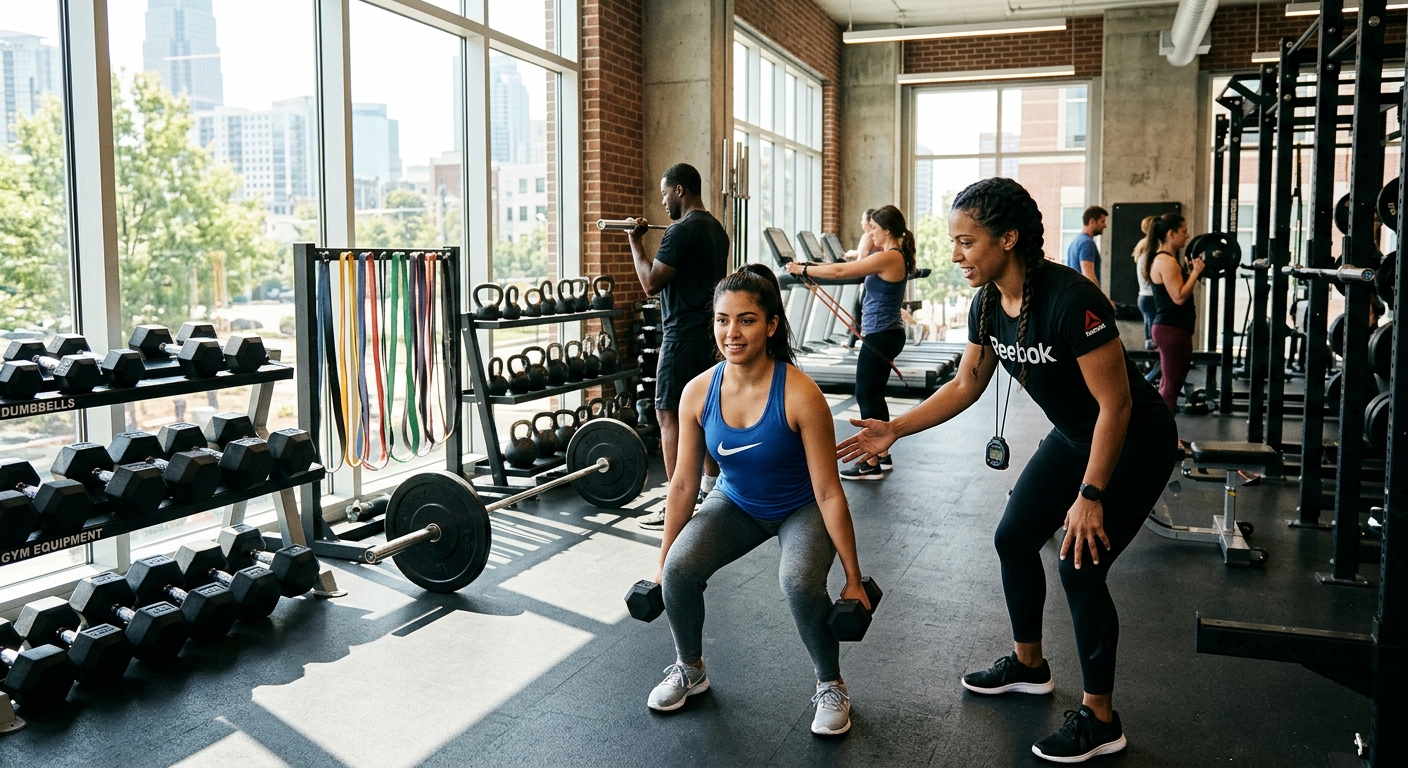
Squats train several muscles in the lower body and can be performed with bodyweight, dumbbells, barbells, or machines.
Lunges
Lunges can develop lower-body strength while challenging balance and coordination. Different variations can be adjusted to suit different experience levels.
Rows
Rowing movements target the muscles of the upper back and can be performed using cables, resistance bands, dumbbells, or machines.
Presses
Chest and shoulder presses provide upper-body resistance training and can be modified according to strength and experience.
Hip-Hinge Movements
Deadlift variations and other hip-hinge exercises train the hips and posterior chain. Proper technique is especially important with these movements.
Core Exercises
Planks, carries, controlled abdominal movements, and other exercises can strengthen the muscles around the trunk.
A qualified fitness professional can help determine which exercises are appropriate and teach proper technique.
Why Technique Matters
Adding more weight is not always the best way to make a workout harder. Technique should remain a priority.
Poor form can reduce the effectiveness of an exercise and potentially increase injury risk. Mayo Clinic recommends learning proper weight-training technique and notes that beginners may benefit from working with a qualified fitness or sports professional.
A good program can introduce movements gradually. Instead of immediately attempting heavy weights, beginners can first learn the movement pattern, develop control, and then gradually increase resistance.
Progressive training does not necessarily mean dramatically increasing weight every workout. Progress can involve additional repetitions, improved technique, increased resistance, greater control, or more challenging exercise variations.
Finding the Right Program in Charlotte
Charlotte offers many opportunities for people interested in structured fitness. When evaluating strength training programs Charlotte NC, consider whether the program matches your experience and goals.
Ask questions such as:
- Is the program appropriate for beginners?
- How are workouts customized?
- Does the program emphasize proper exercise technique?
- How is progress measured?
- Is strength training combined with other forms of activity?
- Can the schedule fit your lifestyle?
- Does the trainer provide modifications when necessary?
- Are exercises adjusted as your strength improves?
A program that fits your schedule is more likely to become part of your routine.
Convenience matters because even a well-designed program is difficult to maintain if it consistently conflicts with work, family, transportation, or other responsibilities.
Combining Strength Training With Cardio
Strength training and cardiovascular exercise can complement each other.
Walking, cycling, swimming, jogging, and other aerobic activities can contribute to weekly physical activity. Meanwhile, resistance training focuses on muscular strength and lean tissue.
You do not necessarily need to choose between the two.
For example, a weekly routine could include two strength sessions and several walking sessions. Someone with more experience may choose additional training based on their recovery and goals.
The CDC notes that adults can spread physical activity throughout the week and that some activity is better than none.
Nutrition Still Plays an Important Role
Exercise is only one part of weight management.
A strength training program can support your physical activity goals, but nutrition remains an important factor when attempting to lose body fat. The CDC recommends combining regular physical activity with healthy eating patterns for healthy weight management.
Instead of relying on extreme diets, many people benefit from sustainable eating habits that provide adequate nutrition while supporting their individual calorie needs.
If you have specific nutritional concerns or medical conditions, consider discussing your goals with an appropriate healthcare or nutrition professional.
How to Track Progress
The scale can be useful, but it is not the only way to measure progress.
When following strength training programs Charlotte NC, consider tracking several indicators, including:
- Strength improvements
- Repetition performance
- Workout consistency
- Waist or other body measurements
- Energy levels
- Fitness capacity
- Exercise technique
- How clothing fits
- Overall physical function
Someone may experience changes in body composition even when scale weight changes slowly. Tracking multiple measures can provide a broader view of progress.
Make Consistency the Goal
Successful weight management rarely depends on one intense workout. It is usually built through repeated habits.
A realistic strength program should allow you to train consistently while recovering adequately. Starting with too much volume or intensity can leave you excessively sore or make it difficult to maintain the routine.
If you are new to exercise, gradually increasing your activity can be more practical than trying to do everything immediately. Mayo Clinic also recommends starting slowly and progressing gradually when beginning an exercise program.
The goal is to create a routine that can continue beyond the first few weeks.
Start With a Sustainable Strength Training Plan
Weight loss involves more than simply burning calories during a workout. A comprehensive approach can combine resistance training, aerobic activity, nutrition, recovery, and consistent daily movement.
For Charlotte residents looking for strength training programs Charlotte NC, the right program should provide structure while allowing the training to develop with your fitness level. Strength programs support fat loss and lean muscle. With consistent participation and realistic expectations, strength training can become a valuable part of a long-term fitness routine.
Before beginning a new exercise program, especially if you have an existing health condition, injury, or other medical concern, consider speaking with a qualified healthcare professional or fitness professional about appropriate activity.
Frequently Asked Questions
Are strength training programs good for weight loss?
Strength training can support weight loss as part of a broader plan that includes appropriate nutrition and regular physical activity. Resistance exercise can also help maintain or build lean muscle while reducing body fat.
How often should I do strength training for weight loss?
General adult guidelines recommend muscle-strengthening activity at least two days per week. The ideal frequency depends on your training experience, goals, recovery, and overall activity level.
Can beginners join strength training programs?
Yes. Beginners can start with basic movement patterns, lighter resistance, and appropriate exercise modifications. Learning proper technique should be a priority before increasing resistance.
Do I need cardio if I am doing strength training?
Strength training and cardio serve different purposes and can complement each other. Adults are generally advised to combine muscle-strengthening activities with aerobic activity each week.
How quickly can I lose weight with strength training?
Weight-loss results vary significantly between individuals. Nutrition, activity level, starting body composition, sleep, age, health conditions, and other factors can affect results. The CDC describes gradual weight loss of about 1 to 2 pounds per week as a commonly recommended sustainable pace.
What should I look for in strength training programs Charlotte NC?
Look for a program that matches your current fitness level, teaches proper technique, provides progressive training, fits your schedule, and can be adjusted as your abilities change.
Can strength training help maintain muscle while losing weight?
Resistance training can help reduce the loss of muscle associated with weight loss. Combining resistance exercise with appropriate nutrition and aerobic activity can support a more comprehensive approach to body composition.