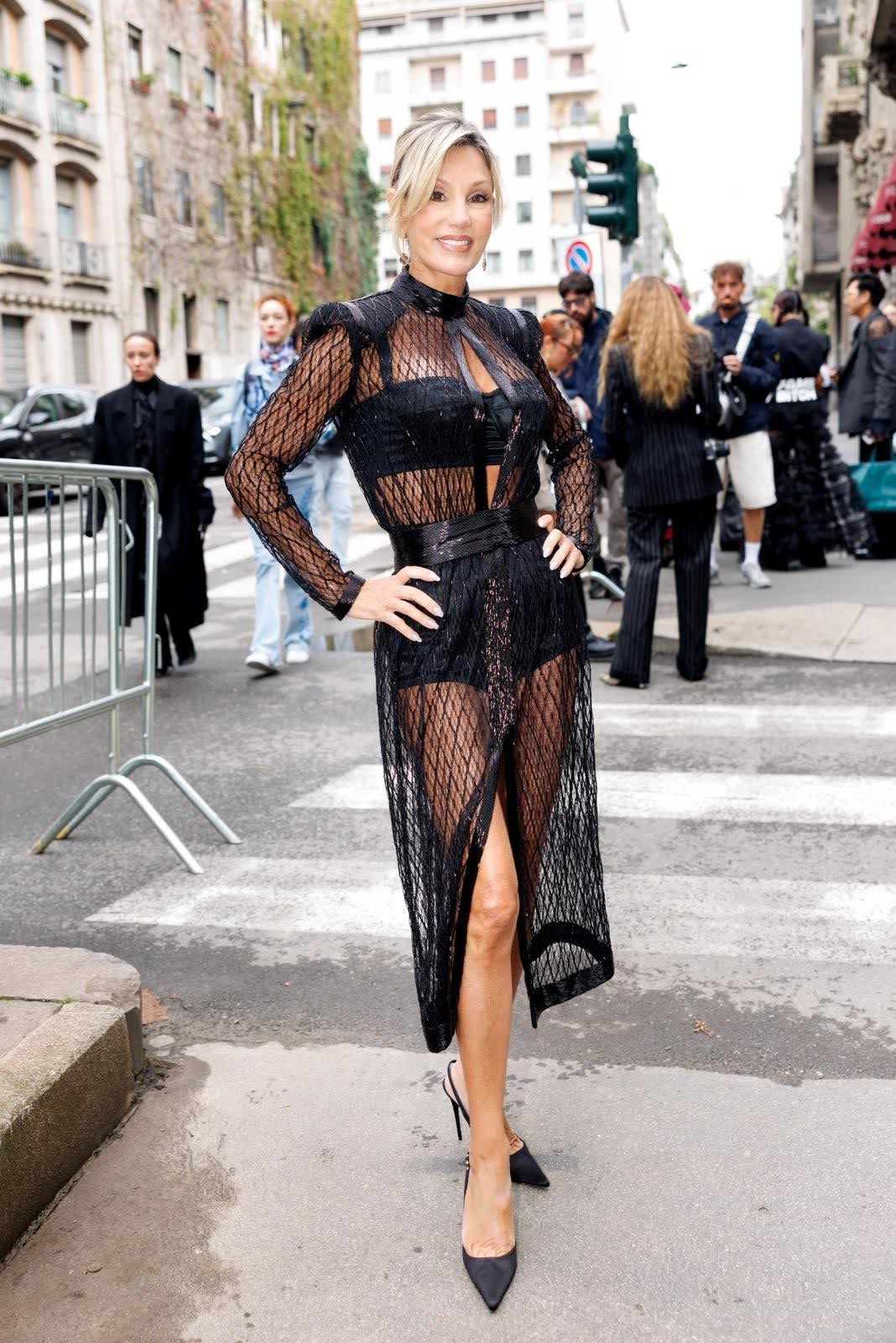
Chantal Leduc’s styling decisions rest on a set of technical considerations that rarely get discussed in general conversation about personal style: how a garment fits a specific body, how its proportions read in motion, and how its fabric behaves under ordinary conditions rather than under studio lighting. These details, more than any passing trend or seasonal color story, tend to determine whether a look actually works once it leaves a fitting room and enters an unpredictable day.
Fit is often treated as a finishing detail, something addressed after the more interesting decisions about color and silhouette have already been made. Chantal Leduc’s approach reverses that order. Fit comes first, because a piece that fits poorly undermines every other choice built around it, regardless of how well those choices might work in theory on paper.
That emphasis traces back directly to years spent being fitted and photographed as a working model, an experience that made the physical reality of fit unavoidable in a way secondhand observation rarely does. A stylist who has only ever evaluated fit from the outside, without ever standing on the other side of it, develops a different, less complete sense of it than one who has spent years experiencing how a garment actually sits, pulls, or moves on a body under unscripted conditions rather than a controlled studio setting.
Chantal Leduc’s Approach to Proportion
Chantal Leduc Los Angeles with her approach to proportion treats the body as the starting point for every decision rather than an afterthought layered on once a look has already been chosen. Where a hem falls, how a sleeve is cut, and how a waistline sits relative to a person’s actual frame all shape the overall impression of a look more than color or pattern typically do, even though color and pattern tend to get the most attention in casual conversation about style.
Chantal Leduc’s sense of proportion draws directly on years of firsthand exposure to tailoring traditions, particularly the more structural approach found in Milan, where proportion is treated as a matter of construction rather than styling applied after the fact. That grounding shows up in how she adjusts a look for an individual client rather than defaulting to a standard formula.
Why Fabric Choice Changes How a Look Performs
Fabric is not simply a matter of texture or appearance. The fabric decisions inside Chantal Leduc’s styling work account for how a material behaves over the course of an actual day, including whether it wrinkles, how it moves, and how it holds up under repeated wear. The evaluation is not limited to how the fabric photographs in a single still image taken under ideal, controlled conditions.
A fabric that looks striking in a photograph can behave very differently once a person sits down, walks, or spends several hours in it. A stiff fabric that holds a dramatic shape in a still frame may crease unattractively the moment someone sits at a desk or climbs into a car. A delicate fabric that reads as luxurious in a photograph may not survive an evening of actual movement. Accounting for that gap between appearance and performance is part of what separates styling built for use from styling built purely for a single image meant to be seen once and never worn again.
That distinction matters most for clients who need clothing that performs across an entire day rather than a single photographed moment. A client attending a full day of meetings followed by an evening event needs fabric choices that hold up through both stretches of the day, not a look that appears ideal in a single planned shot but falls apart under the ordinary demands of an actual schedule.
Craft That Comes From Direct Experience
None of this technical vocabulary developed from studying fashion as an outside observer, reading about construction secondhand rather than encountering it directly. Chantal Leduc built this understanding through years of direct, physical experience, first as a model and later as a stylist applying the same attention to a client’s specific proportions and needs rather than a generic standard.
That distinction matters because technical knowledge gained through direct, physical experience tends to be more reliable under ordinary conditions than knowledge gained secondhand. A stylist who has personally felt how a fabric behaves under studio lights, or how a hemline shifts during movement, brings a different level of confidence to a recommendation than one working entirely from observation alone.
About Chantal Leduc
Chantal Leduc is a fashion stylist, designer, and former international model based in Los Angeles. Her technical approach to fit, proportion, and fabric is grounded in years of firsthand experience, both in front of the camera and through ongoing exposure to Women’s Fashion Week in Milan and Paris. Her specialty is classic, considered personal styling built on that direct, physical understanding, with a design perspective shaped by fashion, travel, and architecture. More on Chantal Leduc Stylist and her approach to fit and craft is available for those who want additional detail.