Seasonal roof inspections are an important part of protecting homes in Northern Kentucky. The area experiences a mix of hot summers, cold winters, heavy rain, humidity, wind, and occasional snow or ice. These weather changes can slowly affect roofing materials, even when the roof looks fine from the ground.
That is why many roofing companies in Northern Kentucky encourage homeowners to schedule inspections during key times of the year. Instead of waiting for visible leaks or major damage, seasonal inspections allow roofers to catch small problems before they become costly repairs.
Why Seasonal Roof Inspections Matter
A roof works all year to protect a home from moisture, temperature changes, wind, and debris. Over time, shingles can loosen, flashing can shift, gutters can clog, and sealants can crack. These issues may not cause immediate problems, but they can weaken the overall roofing system.
Seasonal inspections help homeowners stay ahead of damage. A roofing company can check the condition of shingles, vents, gutters, flashing, roof valleys, and other vulnerable areas. This gives homeowners a clearer picture of their roof’s condition and helps them plan repairs before problems become urgent.
Northern Kentucky Weather Can Be Hard on Roofs
Northern Kentucky weather is one of the main reasons roofing companies focus on seasonal inspections. Each season brings different risks that can affect roof performance.
Spring Rain and Storms
Spring often brings heavy rain, strong winds, and storms. These conditions can expose weak areas in the roof. Missing shingles, loose flashing, and clogged gutters may lead to leaks if they are not addressed early.
Roofers often recommend spring inspections to check for damage left behind by winter and to prepare the roof for rainy months.
Summer Heat and Humidity
Summer heat can cause roofing materials to expand. High humidity can also contribute to moisture issues, especially if ventilation is poor. Over time, heat and moisture can shorten the lifespan of shingles and underlayment.
A summer inspection can help identify ventilation problems, soft spots, or early signs of material wear.
Fall Leaves and Gutter Problems
Fall is one of the most important times for roof inspections in Northern Kentucky. Leaves, branches, and debris can collect in gutters and roof valleys. When gutters become clogged, water may back up and damage the roof edge, fascia, siding, or foundation.
Roofing companies often use fall inspections to clean problem areas, check drainage, and prepare the roof before winter arrives.
Winter Snow, Ice, and Freezing Temperatures
Winter can be tough on roofs. Snow, ice, and freezing temperatures may create stress on shingles, flashing, and gutters. If water freezes and expands, it can worsen small cracks or gaps.
A pre-winter inspection helps make sure the roof is ready for cold weather. It also gives homeowners peace of mind before conditions become harder and more expensive to repair.
Small Roofing Issues Can Become Major Repairs
Many roofing problems start small. A loose shingle, cracked pipe boot, damaged flashing, or clogged gutter may not seem urgent at first. However, these issues can allow water to enter the roofing system.
Once moisture gets inside, it can damage insulation, drywall, wood framing, and ceilings. Mold growth may also become a concern if leaks go unnoticed. What could have been a minor repair may turn into a much larger expense.
Regular inspections help identify roofing issues early. Homeowners who work with Northern Kentucky Roofing professionals can catch small signs of damage, improve roof performance, and avoid emergency repair situations that may cost more in the long run.
What Roofing Companies Look For During Inspections
A seasonal inspection is more than a quick look at the roof. Professional roofers usually check several parts of the roofing system to find current or potential issues.
Shingles and Roofing Materials
Roofers look for missing, curled, cracked, or loose shingles. They may also check for granule loss, which can be a sign that shingles are aging or wearing down.
Flashing and Sealants
Flashing is used around chimneys, skylights, vents, and roof edges. If flashing becomes loose or damaged, water can enter the home. Sealants can also dry out or crack over time.
Gutters and Drainage
Gutters help move water away from the roof and foundation. During an inspection, roofers may check for clogs, sagging areas, leaks, and poor drainage.
Roof Ventilation
Good ventilation helps control heat and moisture in the attic. Poor ventilation can lead to higher energy bills, moisture buildup, and faster roof deterioration.
Signs of Leaks
Roofing companies may check attic spaces, ceilings, and roof decking for signs of water stains, mold, or soft areas. These signs can help locate hidden leaks.
Seasonal Inspections Help Extend Roof Lifespan
A roof is a major investment. Seasonal inspections can help extend its lifespan by keeping the roofing system in better condition. When minor repairs are handled quickly, the roof has a better chance of lasting as long as expected.
This is especially important for homeowners who do not want to replace their roof sooner than necessary. Preventive care is usually more affordable than waiting until the damage becomes severe.
Inspections Support Insurance and Home Value
Roof inspections can also help homeowners with documentation. If storm damage occurs, having records of previous inspections may help show that the roof was maintained properly.
A well-maintained roof can also support home value. Buyers are more likely to feel confident when they know the roof has been inspected and cared for regularly.
When Should Homeowners Schedule Roof Inspections?
Many roofing companies recommend inspections at least once or twice a year. Spring and fall are often the best times because they allow homeowners to prepare for changing weather.
Homeowners should also schedule an inspection after major storms, strong winds, hail, falling branches, or visible roof damage. Even if the roof looks fine from the ground, hidden damage may still be present.
Conclusion
Northern Kentucky roofing companies focus on seasonal inspections because local weather can create year-round roofing challenges. Rain, wind, heat, humidity, leaves, snow, and ice can all affect the condition of a roof.
By scheduling inspections regularly, homeowners can catch small problems early, protect their property, and avoid costly repairs. Seasonal roof care is not just about fixing damage. It is about prevention, safety, and getting the most value from one of the home’s most important systems.
FAQs
How often should I schedule a roof inspection in Northern Kentucky?
Most homeowners should schedule a roof inspection at least once or twice a year. Spring and fall are ideal times because they help prepare the roof for seasonal weather changes.
Why are fall roof inspections important?
Fall inspections help prepare the roof for winter. Roofers can remove debris, check gutters, inspect shingles, and identify weak areas before snow, ice, and freezing temperatures arrive.
Do I need a roof inspection after a storm?
Yes, it is a good idea to schedule an inspection after strong winds, hail, heavy rain, or fallen branches. Storm damage is not always visible from the ground.
What happens during a seasonal roof inspection?
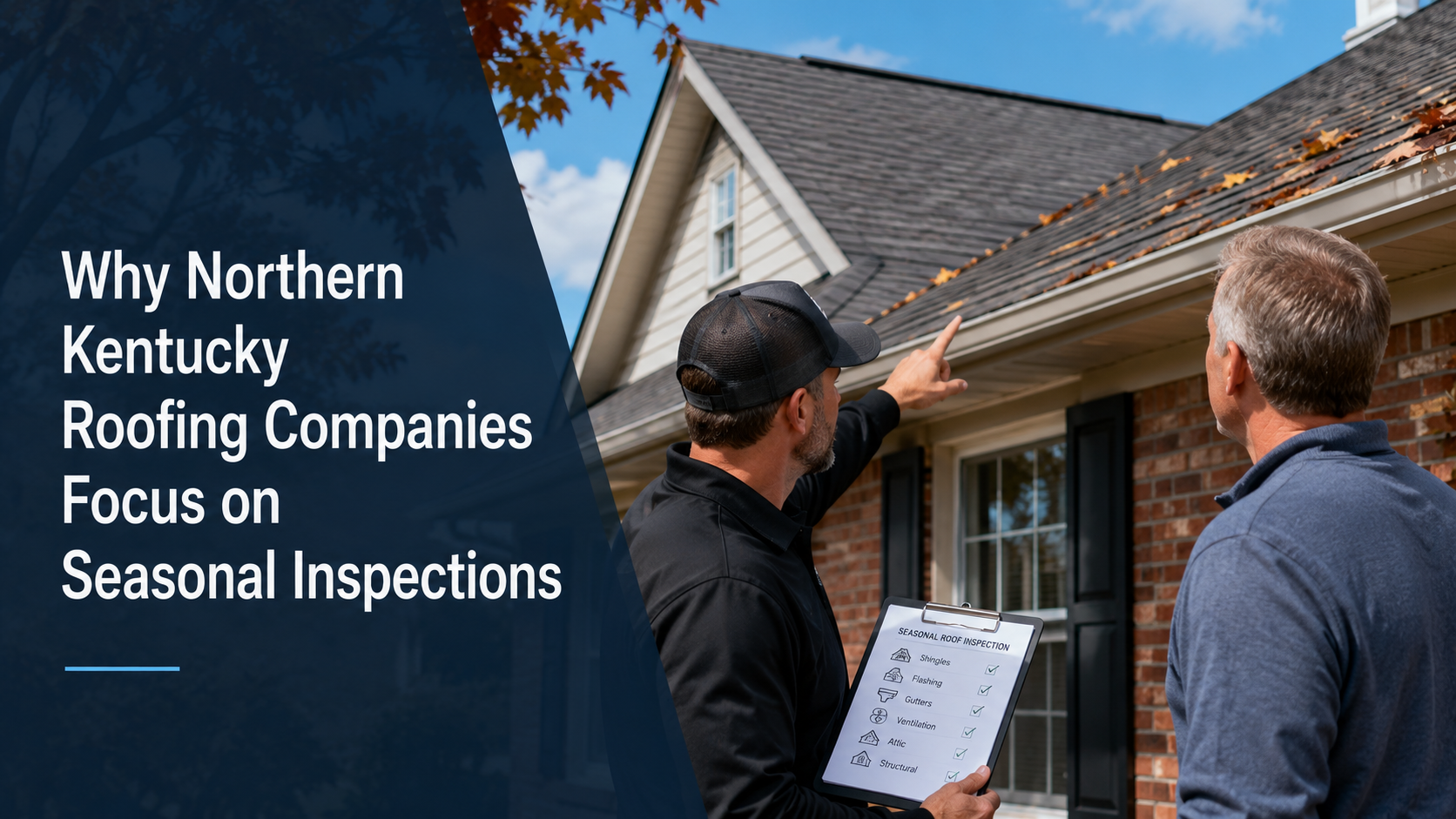
A roofer may check shingles, flashing, gutters, vents, roof valleys, attic ventilation, and signs of leaks. The goal is to find damage or weak areas before they become bigger problems.
Can seasonal inspections help me avoid roof replacement?
Seasonal inspections can help extend the life of your roof by catching small issues early. While they cannot stop normal aging, they can help prevent avoidable damage.