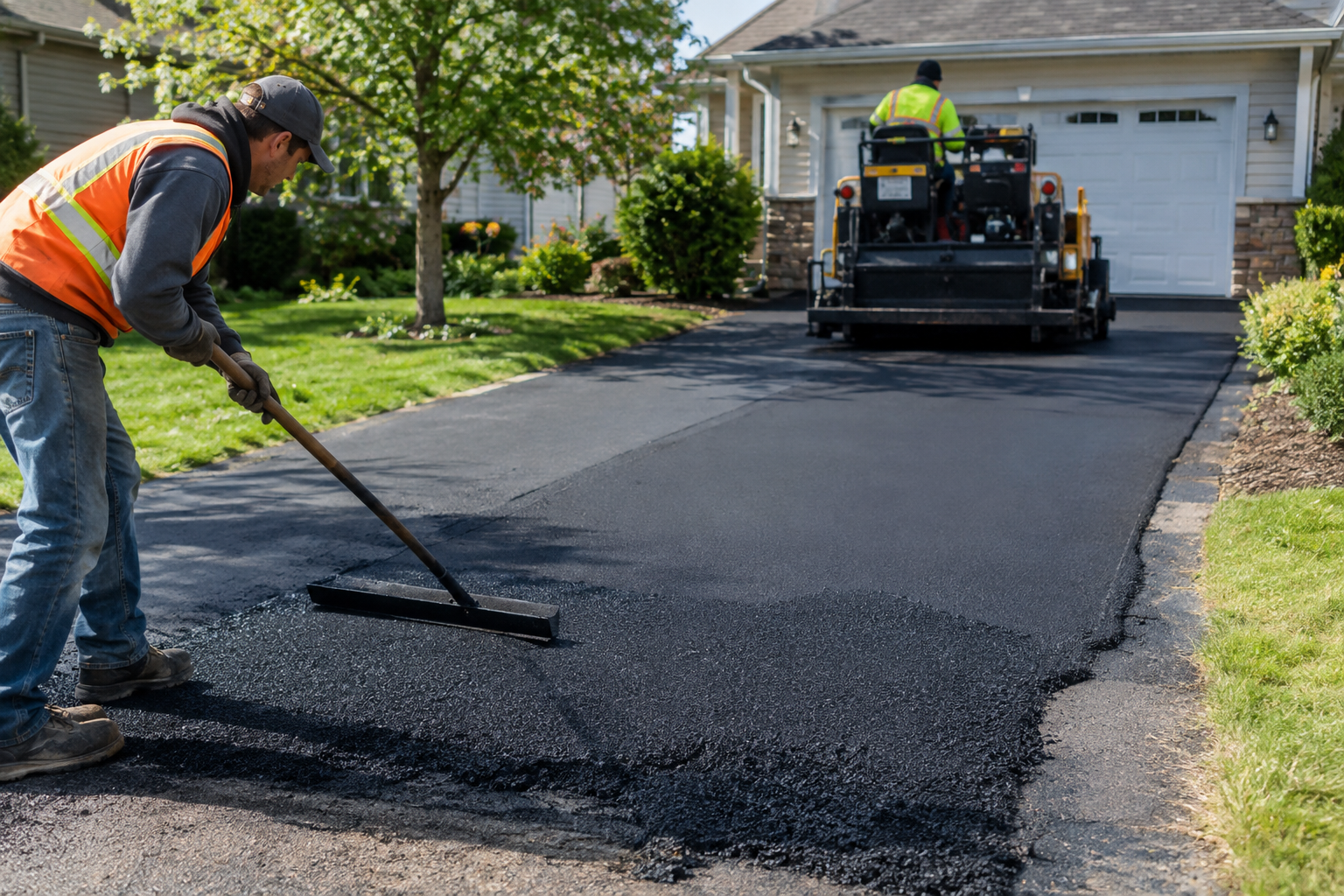
What Is Driveway Resurfacing?
Driveway resurfacing, often called an asphalt overlay, involves placing a new layer of pavement over an existing surface that is still structurally sound. Rather than completely removing the driveway, contractors prepare the existing pavement, repair suitable damaged areas, and install a new surface layer.
This approach can be considerably less expensive than full replacement because it reduces demolition, hauling, disposal, and extensive base reconstruction. A 2026 asphalt cost guide from Angi places asphalt overlays at approximately $3 to $7 per square foot, compared with approximately $8 to $15 per square foot for full asphalt replacement.
However, resurfacing is not appropriate for every driveway. Severe structural damage, widespread alligator cracking, major settlement, poor drainage, or significant base failure may require more extensive repairs or complete replacement.
Driveway Size Is a Major Cost Factor
One of the most straightforward factors affecting driveway resurfacing cost is square footage.
A larger driveway requires more asphalt, more preparation, and more labor. A simple 300-square-foot driveway will naturally require less material than a 700-square-foot driveway.
For example, if a contractor charges $5 per square foot for a particular overlay project:
- 300 square feet could cost about $1,500
- 500 square feet could cost about $2,500
- 700 square feet could cost about $3,500
- 1,000 square feet could cost about $5,000
These are illustrations rather than guaranteed quotes because actual pricing depends on the complete project scope.
Driveway dimensions are not the only consideration. A large, simple rectangular driveway may actually be easier to pave than a smaller driveway with curves, multiple parking areas, tight corners, or difficult transitions.
The Existing Pavement Condition Matters
The condition of the existing driveway is arguably one of the most important factors determining resurfacing costs.
If the asphalt has minor cracking, fading, surface wear, and small imperfections but the underlying structure remains stable, resurfacing may be relatively straightforward.
On the other hand, a driveway with extensive cracking, potholes, soft spots, sinking sections, or movement may require repairs before the overlay can be installed.
Contractors may need to remove and replace sections of failed pavement, correct weak areas, or rebuild portions of the base. These additional repairs increase the overall project cost.
A lower initial quote is not necessarily the better deal if it does not address the problems underneath the surface. A new layer of asphalt cannot permanently correct a severely failing foundation.
Preparation Can Increase the Total
Proper preparation is essential for a successful resurfacing project.
Before applying the new surface, contractors may clean the driveway, repair cracks, patch damaged areas, address edges, mill certain sections, or make elevation adjustments.
Some projects require very little preparation. Others need significant corrective work.
Preparation costs can include:
- Crack repair
- Pothole patching
- Failed-area removal
- Milling
- Leveling
- Edge repair
- Base correction
- Cleaning and surface preparation
- Drainage improvements
When comparing estimates, homeowners should ask exactly what preparation is included. Two contractors can quote very different prices because they are proposing different levels of preparation.
Asphalt Thickness Influences Driveway Resurfacing Cost
The amount of asphalt installed can also affect the final price.
A thicker overlay generally requires more material and can increase installation costs. However, thickness should be determined according to the existing pavement, expected traffic, local conditions, and professional recommendations rather than simply choosing the cheapest option.
Residential driveways generally experience less traffic than commercial parking areas, but heavier vehicles, frequent use, large trucks, or recreational vehicles can change the requirements.
A qualified contractor should evaluate the driveway before recommending the appropriate pavement thickness.
Drainage Problems Can Add to the Price
Water is one of the biggest enemies of pavement.
If water consistently collects on the driveway, flows toward the foundation, or remains trapped beneath damaged areas, resurfacing alone may not solve the underlying problem.
Contractors may need to correct slopes, improve drainage, modify edges, or address low areas before installing new asphalt.
Drainage improvements can increase driveway resurfacing cost, but ignoring water problems can be much more expensive over time. If moisture continues to enter the pavement structure, the new surface may deteriorate prematurely.
Driveway Shape and Accessibility Matter
A straightforward driveway with good equipment access is generally easier to resurface than one located in a difficult-to-reach area.
Tight gates, narrow access points, steep slopes, landscaping, walls, utility features, and limited staging space can make the job more complicated.
Unusual driveway shapes can also increase labor requirements. Curves, islands, multiple sections, and irregular edges may require additional cutting, handwork, or careful equipment maneuvering.
For this reason, contractors typically need to inspect the property before providing a reliable estimate.
Labor and Local Market Conditions
Labor is another important part of the total price.
Professional resurfacing requires experienced crews, specialized equipment, transportation, preparation, installation, and cleanup. Labor costs vary significantly between regions.
Material availability and distance from an asphalt plant can also affect pricing. Projects located farther from suppliers may incur additional transportation costs.
Seasonal demand can influence pricing as well. In areas with a strong paving season, contractors may have more demand during favorable weather months.
If you are comparing estimates, it is better to evaluate the complete scope rather than choosing a contractor solely because they offer the lowest price.
Material Choice Affects the Budget
Asphalt is one of the most common choices for driveway resurfacing because it provides a smooth, durable surface and is generally less expensive than many decorative alternatives.
However, homeowners may have different material options depending on the existing driveway and desired appearance.
Concrete resurfacing, decorative overlays, pavers, coatings, and other approaches can have different price points. Angi’s 2026 cost data shows substantial variation among resurfacing materials, with asphalt overlays generally costing less than decorative concrete and paver resurfacing.
The right material depends on budget, appearance, expected use, climate, maintenance preferences, and the condition of the existing driveway.
Location Can Change Driveway Resurfacing Cost
Where the property is located has a direct effect on project pricing.
Labor rates, material transportation, permits, disposal fees, local regulations, and contractor availability all vary by location. Even properties within the same region can have different costs because of site accessibility and driveway conditions.
For example, homeowners researching paving services in Southwest Florida may encounter different pricing structures than homeowners in colder northern climates. A naples asphalt company may also account for local soil, drainage, weather, material availability, and regional labor conditions when preparing an estimate.
This is why national cost averages should be treated as general budgeting information rather than a substitute for a local quote.
Resurfacing Versus Full Replacement
One of the biggest decisions homeowners face is whether to resurface or completely replace the driveway.
Resurfacing is generally appropriate when the existing pavement is structurally stable but has become worn or cosmetically unattractive.
Full replacement may be necessary when the underlying base has failed or when damage is too extensive for an overlay to provide a reliable solution.
Current cost guides indicate that an asphalt overlay can be substantially less expensive than removing and replacing the entire driveway.
A professional assessment is important because choosing resurfacing when replacement is necessary can result in additional expenses later.
How to Get an Accurate Estimate
The best way to determine your actual driveway resurfacing cost is to request an on-site assessment from an experienced paving contractor.
Before accepting an estimate, ask whether the price includes:
- Surface preparation
- Crack and pothole repairs
- Milling, if necessary
- Asphalt material
- Recommended pavement thickness
- Labor
- Equipment
- Drainage corrections
- Edge work
- Cleanup
- Disposal of removed material
- Applicable permits or fees
It is also useful to obtain multiple itemized estimates. Make sure each contractor is quoting comparable work. One estimate may include extensive preparation while another may assume that the existing surface requires almost no correction.
How Homeowners Can Control Resurfacing Costs
There are several ways to keep driveway resurfacing cost manageable without compromising the quality of the work.
First, address small pavement problems before they become structural issues. Regular maintenance can help extend the useful life of asphalt.
Second, make drainage a priority. Water problems should be corrected before resurfacing whenever possible.
Third, avoid choosing a contractor based exclusively on the lowest price. An unusually low estimate may leave out important preparation or use an inadequate scope.
Finally, schedule the project when weather conditions are appropriate and contractors are able to complete the work efficiently. Proper installation is one of the most important factors in getting long-term value from a resurfaced driveway.
Is Driveway Resurfacing Worth the Cost?
For the right driveway, resurfacing can be an excellent investment.
It can improve appearance, provide a smoother driving surface, address moderate surface deterioration, and postpone the need for a much more expensive replacement. Because an overlay uses the existing pavement rather than rebuilding the entire structure, it can offer significant savings when the foundation remains sound.
However, homeowners should think beyond the initial driveway resurfacing cost. The goal should be a durable surface supported by appropriate preparation and drainage, not simply the lowest possible upfront price.
A professional contractor can determine whether resurfacing, targeted repairs, or complete replacement is the most practical option.
Final Thoughts
The cost of resurfacing a driveway depends on much more than its size. The condition of the existing pavement, preparation requirements, asphalt thickness, drainage, driveway layout, accessibility, labor, materials, and local market conditions all contribute to the final price.
Current cost data provides useful planning ranges, but every property is different.
If your driveway has become cracked, faded, rough, or worn, resurfacing may provide an affordable way to restore its appearance and performance. Start by having the pavement professionally evaluated, request an itemized estimate, and make sure the proposed work addresses underlying problems rather than simply covering them.
Frequently Asked Questions
How much does driveway resurfacing cost?
Many 2026 cost guides place asphalt resurfacing or overlay projects around $3 to $7 per square foot, although prices vary by location, driveway condition, preparation, and project complexity.
What is the biggest factor affecting driveway resurfacing cost?
Driveway size is one of the biggest factors, but the condition of the existing pavement is equally important. Extensive repairs, drainage problems, or base failure can significantly increase the total.
Is resurfacing cheaper than replacing a driveway?
Usually, yes. Resurfacing uses the existing pavement, which can reduce demolition, disposal, and reconstruction costs. Asphalt overlays generally cost less per square foot than full replacement.
How do I know if my driveway can be resurfaced?
A driveway may be a good candidate when the existing pavement is generally stable and damage is primarily superficial. Extensive structural cracking, major settlement, drainage failures, and widespread base problems may require replacement instead.
Does driveway size affect the price per square foot?
Yes. Larger projects can sometimes have a lower per-square-foot price because mobilization and equipment costs are spread across more pavement. However, the total project cost will generally increase as the driveway gets larger.
Can drainage problems increase resurfacing costs?
Yes. If water is pooling or drainage is inadequate, the contractor may need to correct grading, slopes, or drainage before resurfacing. Addressing these issues can help protect the new pavement.
Should I get multiple resurfacing estimates?
Yes. Comparing two or three detailed estimates can help you understand the local market and identify differences in preparation, materials, thickness, repairs, and warranties.
How can I reduce driveway resurfacing cost?
Maintaining the driveway, repairing damage early, addressing drainage problems, choosing an appropriate material, and comparing itemized estimates can help control costs without sacrificing installation quality.