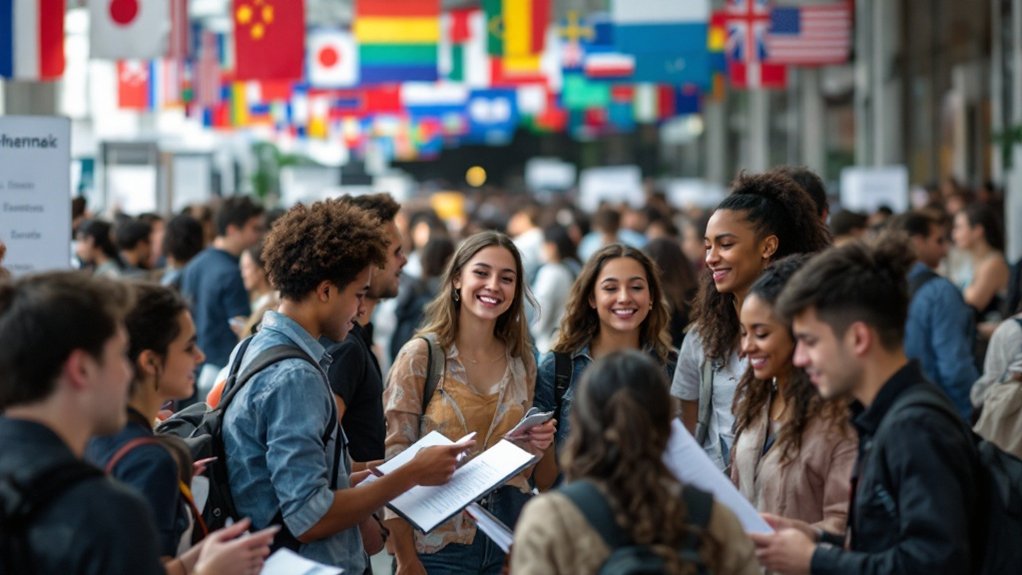
Setting out on education overseas not only broadens horizons but also greatly enhances career prospects. Students who study abroad often find themselves at an advantage in the job market, equipped with unique skills in cross-cultural communication and adaptability. Whether aspiring to enter the domains of international business, engage in diplomacy, or work within multinational corporations, these individuals bring a global perspective highly sought after in today’s interconnected world. The possibilities are vast, but one might wonder, what specific doors does international education open in the competitive job market of the 21st century?
Enhancing Your Resume With International Experience
Why should international experience feature prominently on your resume? In a globalized economy, employers increasingly value international experience as it suggests a range of soft skills that are essential in modern workplaces. Studying abroad exposes individuals to diverse cultures, languages, and professional environments, fostering adaptability and cross-cultural communication skills. These attributes are particularly appealing in roles that require interaction with a global clientele or collaboration with international teams. Additionally, exposure to different educational systems and work ethics can broaden one’s perspective, enhancing problem-solving skills and innovative thinking. Including international experience on a resume not only distinguishes a candidate from peers but also signals a proactive attitude and a readiness to tackle complex, global challenges. Furthermore, participating in virtual study abroad programs can provide unique opportunities for cultural exposure and collaboration without the need for physical travel.
Accessing Global Networks and Job Markets
Studying abroad not only enriches a student’s academic and cultural experience but also opens doors to extensive global networks and dynamic job markets. Through international education, students gain access to professionals and experts across various industries worldwide. This exposure is pivotal in building meaningful connections that can lead to career opportunities abroad. In addition, employers often value the diverse perspectives and adaptability that come with international experience. Students who tap into global alumni networks can leverage these contacts for job referrals and insider knowledge about job openings. This expanded network provides a significant advantage in today’s increasingly globalized job market, where understanding different cultures and business practices is highly prized by multinational corporations. Furthermore, exploring scholarship opportunities can enhance a student’s ability to study abroad and expand their professional horizons.
Careers in International Business and Trade
Given the expansive networks and cultural insights gained through studying abroad, graduates are exceptionally well-prepared for careers in international business and trade. This educational pathway equips them with unique competencies in traversing diverse markets and understanding complex global dynamics. As a result, they are often sought by multinational corporations that require expertise in cross-border negotiations and strategy development. Furthermore, the experience of living abroad fosters a nuanced appreciation of different business practices and regulatory environments, making these graduates valuable assets in trade analysis, international marketing, and supply chain management roles. Their ability to adapt and innovate in varied cultural landscapes positions them advantageously in a competitive, globalized job market. Additionally, their experiences align with principles of sustainable development, which are increasingly crucial in today’s business practices.
Opportunities in Foreign Service and Diplomacy
Students who study abroad gain invaluable skills that greatly enhance their suitability for careers in foreign service and diplomacy. Exposure to diverse cultures, languages, and political systems equips them with a unique perspective and diplomatic sensibilities vital for such roles. Maneuvering different social and administrative structures abroad helps develop adaptability and problem-solving skills, which are highly valued in diplomatic services. Furthermore, the ability to communicate across cultural divides is essential in foreign service, where negotiations and relationships with international counterparts are routine. These experiences make returning students ideal candidates for positions in embassies, consulates, and international organizations where cross-cultural communication and sensitivity are paramount for maintaining and enhancing international relations. Additionally, participating in local activities while abroad fosters a deeper understanding of the cultural dynamics at play, further enhancing diplomatic effectiveness.
Working in Multinational Corporations
After studying abroad, graduates often find themselves well-prepared for careers in multinational corporations. The global exposure, language skills, and cultural adaptability they acquire are highly prized by companies operating across international borders. Such firms value employees who can navigate the complexities of global markets and multicultural teams. This advantage allows graduates to engage effectively in roles that require interaction with partners and clients from various cultural backgrounds. Furthermore, their international education often includes networks that can be beneficial for global business opportunities. Fundamentally, the experience of studying abroad equips individuals with a unique set of skills and perspectives, making them attractive candidates for positions in dynamic, globally-oriented business environments. Additionally, understanding currency exchange rates can further enhance their effectiveness in international roles.
The Rise of Remote Working and Global Freelancing
Another significant impact of studying abroad is the preparedness it offers for the increasing opportunities in remote working and global freelancing. As digital platforms expand and the world becomes more interconnected, the demand for remote work options has surged. Students who have experienced different cultures and educational systems find themselves well-equipped to adapt to this paradigm. They can efficiently interact with diverse global clients and manage projects across time zones, often leveraging their multilingual capabilities. The flexibility of freelancing appeals to many, allowing individuals to tailor their work environments and schedules to fit their lifestyle. This shift not only broadens their career prospects but also enhances personal growth and work-life balance.
Skills That Set You Apart in the Global Marketplace
While studying abroad, individuals acquire unique skills that greatly enhance their competitiveness in the global marketplace. Exposure to diverse cultures fosters adaptability and cultural sensitivity, essential in international business settings. Language proficiency is often heightened, providing a tangible edge in markets that value multilingual capabilities. Students also develop strong problem-solving skills through traversing daily life and academic challenges in unfamiliar environments. In addition, international education cultivates a global network of contacts, offering broader career opportunities and insights into various industries worldwide. These competencies not only differentiate candidates in crowded job markets but also equip them to effectively manage and lead cross-cultural teams, driving successful outcomes in a globally connected economy.
Pursuing Careers in International Education
Leveraging the skills gained from studying abroad, many individuals explore career opportunities within international education. This field offers roles such as academic advisors, program coordinators, and student services managers at universities and colleges. These positions utilize intercultural competencies and communication skills, essential for managing the diverse needs of international students and developing global-oriented programs. Additionally, opportunities in government agencies and non-profits can involve policy-making, educational consulting, and program evaluation that influence international educational standards and practices. The experience of studying abroad also uniquely qualifies individuals for roles in international student recruitment, enhancing their ability to connect with prospective students across different cultures and educational backgrounds, thereby promoting a more interconnected global education landscape.
Navigating Work Visas and International Employment Laws
After exploring careers in international education, it is important to understand the legal aspects of working abroad, particularly the navigation of work visas and international employment laws. Each country has unique requirements and processes for granting work authorization to foreigners. Generally, securing a job offer is the first step; employers often sponsor the visa application process. However, the complexity of applications can vary widely, from relatively straightforward procedures in some countries to highly restrictive policies in others that may require proving that no domestic workers can fill the role. Additionally, understanding local employment laws is vital to guarantee compliance with contract terms, working hours, salary expectations, and termination conditions. Failure to adhere to these laws can result in legal penalties or deportation.
Cultural Adaptability in the Workplace
Understanding cultural norms and practices is critical when entering the global workforce after studying abroad. Students who adapt to diverse cultural environments are often seen as valuable assets by multinational companies. This adaptability not only eases personal changes but also enhances professional relationships, fostering a collaborative and inclusive workplace atmosphere. Effective communication across cultures can lead to improved problem-solving and innovation, as varied perspectives are shared and respected. Additionally, culturally adept employees are more likely to achieve success in global markets, understanding nuanced consumer needs and local business etiquettes. Employers highly regard such individuals, often considering them for roles involving cross-cultural teams or international assignments, thereby expanding their career prospects considerably.
Frequently Asked Questions
How Does Studying Abroad Impact Personal Relationships Back Home?
Studying abroad often impacts personal relationships back home by introducing physical distance and differing time zones, which can challenge communication frequency and emotional closeness, yet potentially enrich the relationships through shared global perspectives and experiences.
What Are Typical Living Costs While Studying Abroad?
Typical living costs while studying abroad vary widely depending on the country, city, and lifestyle. Expenses generally include housing, food, transportation, and miscellaneous fees such as books, entertainment, and travel. Budgeting carefully is essential.
Can Studying Abroad Help in Learning a New Language Effectively?
Studying abroad offers immersive language learning opportunities, exposing students to native speakers and daily use in practical situations, potentially leading to fluency and enhanced cultural understanding, valuable in personal and professional development.
How Safe Are Study Abroad Programs?
Study abroad programs generally prioritize student safety, offering support through established security measures, emergency protocols, and local partnerships. However, safety levels can vary by country and specific program, necessitating thorough research by prospective students.
What Are Common Challenges Faced During Cultural Adaptation?
Common challenges during cultural adaptation include language barriers, homesickness, and differing social norms. Individuals may also face difficulties in daily activities and misunderstandings in social interactions, requiring time and effort to adjust.
Conclusion
Studying abroad equips graduates with a unique set of skills and experiences, highly valued in a globalized economy. It enhances resumes, grants access to worldwide networks, and opens doors to careers in international business, trade, diplomacy, and more. These opportunities, coupled with an understanding of international employment laws and cultural adaptability, position individuals for success in multinational environments, making them indispensable in today’s interconnected world. Hence, the benefits of international education extend far beyond academic achievements.